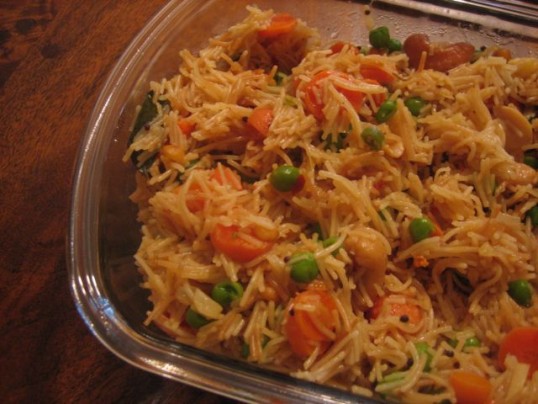
The fusion between Indian cuisine and Chinese cuisine is an amazing blend which has yielded some very popular dishes such as Chinese Noodles, Gobi Manchurian, etc. Especially popular in Mumbai (formerly Bombay), India, "Indian Chinese" as it is fondly called, the food is available everywhere including the road side stalls at the famous Chowpati beach. Enjoy this delicious version of Indian Chinese fusion recipe called "Indian Chinese Noodles". Quick is high on my list of redeemable recipe qualities. Although, it’s right up there with tasty and healthy. This sometimes makes for a challenging recipe hunt. I picked up a few packs of MTR vermicelli noodles a few weeks back for experimenting with vermicelli style upma, or semiya upma. As I started making the noodles though, I decided the taste would really benefit from a splash of soy sauce and chili garlic hot sauce. The result was spicy, soy spiked noodles mixed with fresh (I use this word loosely since I did use frozen peas) veggies and topped off with crunchy cashews. I’m going to classify this as “Indian Chinese” since anything that mixes mustard seeds with soy sauce seems a little bit Indian, a little bit Chinese to me.
This recipe is great because it’s a real “clean out you vegetable crisper” recipe – you can add cabbage, bell peppers, or broccoli to this – really whatever you find in the fridge. Let me know if you think of any other good add ons.
 I'm sure Asian cooking guru Jaden of Steamy Kitchen would cringe if she saw this noodle recipe, but I can't help it. It was my go-to dish my last year in college and it's a keeper. My senior year I shared a big beach house with four other girls in Santa Cruz, California. I seemed to be the only one really interested in cooking. One was a Japanese American basketball player who ate bowls and bowls of rice, one was a perpetual dieter, another favored baked or fried foods that always seemed to incorporate Crisco, and one was a pint-sized Chinese American sophomore from Sacramento who came from a very large family. She didn't cook very frequently, but this easy noodle recipe was something I learned from her.
I recently received a number of Annie Chun's noodles. The dried chow mein noodles reminded me of this long forgotten recipe. Perfect for a college student or anyone else for that matter, it's fast, cheap and easy. It can be eaten very simply or dressed up any number of ways with toppings. It's good served hot or cold. I like it with a sprinkling of chopped cilantro and green onions and shreds of chicken. But it's surprisingly satisfying plain too. I have no idea if it is in any way authentic, I only know it makes a comforting meal when you can't think any further than the pantry.
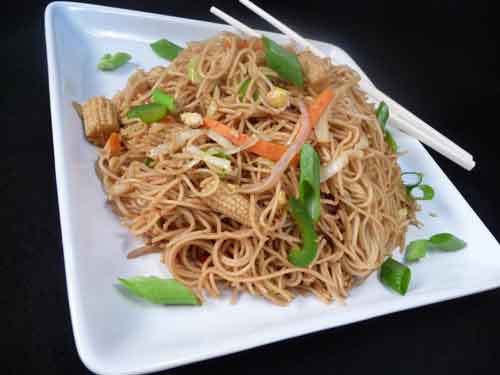 Noodles in any shape or form are my weakness. They are why I would fail the Atkins diet so miserably. Well that and the fact that I eat rice almost everyday. Chinese stir-fried noodles are one of my favorite dishes because it's delicious and a cinch to make. Like fried rice, it's usually something I can make when I have nothing planned, throw some ingredients together, and it comes out so good every time that I can almost eat the whole pan myself. This is one of the dishes I cooked for Chinese New Year. It's traditional to eat noodle dishes for New Years and birthdays because the long strands symbolize long life. So don't cut your noodles! Slurp, slurp away to your heart's content!
In Chinese restaurants, this dish is usually called chicken, beef, happy family, etc. etc. chow mein, which is the Cantonese translation of pan fried noodles. In Mandarin we call it chao mian, which means the same thing. The dish is made with wheat or egg noodles. I like to use egg noodles because they have a chewier texture and have a pleasant yellow color. If you use rice noodles, it's called chow fun/chao feng. There's a lot of flexibility with this dish. You can use whatever protein and veggies you feel like. Chicken, shrimp, pork, BBQ pork, beef, tofu or a combination would work. You should cut your meat or tofu into strips so they're easier to eat with the noodles but you don't need to cut the shrimp, just peel and devein. I used some Chinese BBQ pork I made the day before.
 When you make chow mein noodles be sure to rinse them or they can get very sticky. I've used this sauce on flat rice noodles and even on spaghetti in a pinch. While the recipe I learned was equal parts ketchup and oyster sauce, you could add ginger, toasted sesame oil, Chinese chile garlic sauce, Sriracha sauce, whatever you like! It is one of the reasons I always have a bottle of good quality oyster sauce on hand.
 For the vegetables, it's best to use ones that can be julienned or cut into strips. So peas would not be a good idea but you can use carrots, cabbage, snow pea pods, celery, red bell pepper, baby bok choy, sprouts, bamboo shoots, mushrooms, the list can go on and on. I cook things in three stages. First the meat, then the veggies (adding meat to the veggies towards the end), then the noodles and then add everything together in the end to heat through and mix evenly. For a pound of noodles I use a pound of protein and this should serve about 4.
 If you're starting with raw meat, use the marinade I included.
- If you're starting with cooked meats, then add the ginger slices to the oil when you're cooking the veggies in step 2
- If you're using mushrooms, you'll need to cook those first before adding the rest of the vegetables, cook them until they release their juices and the juices evaporate before adding the rest of the ingredients. Otherwise the rest of the veggies will get soggy.
- Mix the oyster sauce, soy sauce, and sugar together in a little bowl before you add it to the noodles so you can add the seasoning in one step. Add more seasoning later if you need to