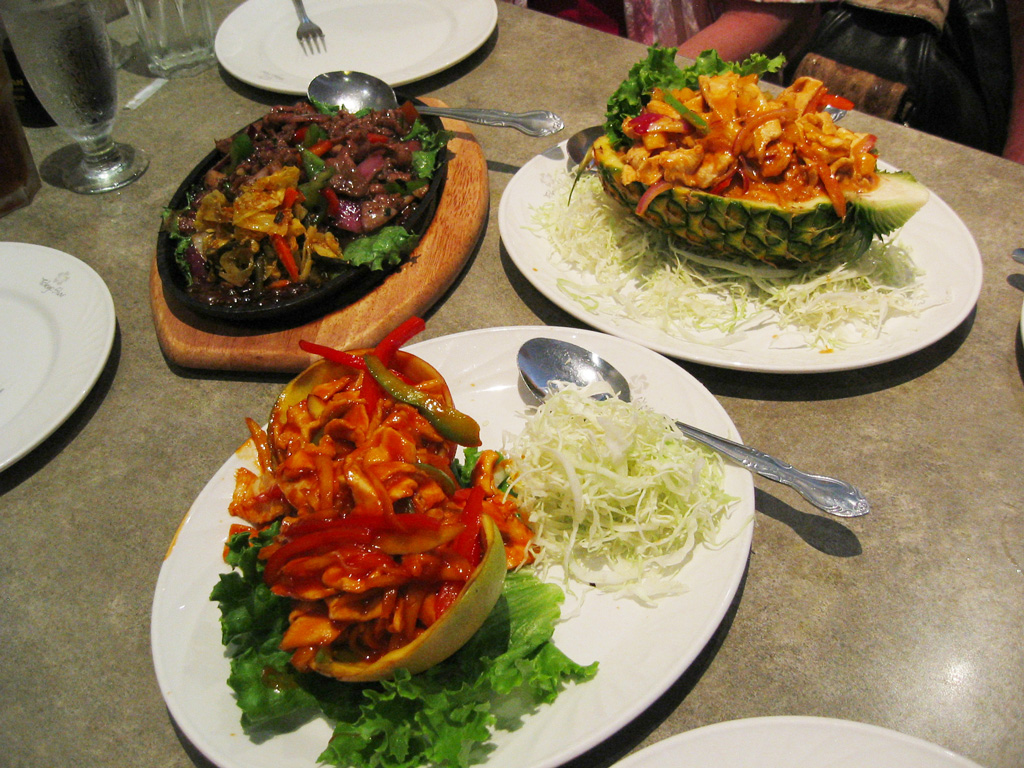
 With ingredients such as high cholesterol coconut milk, clarified butter and sugar cane, the traditional Malaysian diet may be among the most unhealthy cuisines in the world.
But chefs in food-mad Malaysia, which touts itself as an Asian gastronomic heaven, are reinventing local cuisine due to a sharp jump in cases of obesity, diabetes and strokes in the Southeast Asian Muslim country.
Fattening coconut milk, an essential ingredient in Malaysia's spicy curries, is being shunted aside for nutritious soy milk. White rice is being replaced by brown rice and greens are playing a more dominant role on the menus of local restaurants.
Malaysian celebrity chef Ismail Ahmad has changed the menu of his restaurant Rebung in an old bungalow in Kuala Lumpur to include more vegetables and less meat
"People want to look good, they want to look healthy," said the 47-year old who has added braised tofu, ferns and beansprouts in chili paste to his menu.
"Before, 70 per cent of my buffet dishes was meat. Now I use more roots and vegetables," added Ismail, who said he cut sugar and rice from his diet after a battle with gout.
From fine dining lobster veloute to rice flour noodles fried in lard from street hawkers, food in Malaysia is often high in cholesterol and fat, with copious amounts of sugar and salt.
In a country where eating is a national pastime, Malaysians routinely drive miles in search of deep-fried dim sum in the northern town of Ipoh or curried offal rice in the island state of Penang.
But healthy eating is catching on.
Diets to lose weight and get healthy are popular, ranging from the classic low-carbohydrates, high-protein diets to fad diets of eating certain foods or adding herbal medicines to dishes.
At Purple Cane, an eatery in the Malaysian capital, tea is an ingredient in all its dishes ranging from fish to prawns.
"Our customers like something that's not oily," said K C Tan, a manager with the restaurant. "Tea is good for health, it brings down cholesterol and fat."
Malaysia has good reason to curb the widespread use of fats and sugars in local food as it has one of the highest rates of diabetes, strokes and heart disease in Southeast Asia.
In 2000, 7.6 per cent of Malaysians over the age of 20, or 1.82 million people, were diabetic in a country of nearly 24 million people, according to the World Health Organisation. At around the same time, 6.7 per cent of the population of Indonesia and 3.8 per cent of the population of Thailand had diabetes.

 a couple times a month, i like to hit up the los angeles farmers market, grab a few beers, and eat some fine vegan food. there’s so many little stands to choose from, and almost everything i’ve eaten there has been delicious, albeit rather expensive. unfortunately, for months, i managed to overlook one of the best vegan-friendly eateries that the food court has to offer, until reading about it on yourveganmom. singapore’s banana leaf serves fine malaysian cuisine that can be veganized upon order (woo hoo!)…and what i’ve tried tastes divine.


No comments:
Post a Comment