Monday, April 26, 2010

Saturday, April 24, 2010
WISDOM OF THE WORLD - WEEK 103

The Greedy Sons
There was once a hard-working and generous farmer who had several idle and greedy sons. On his deathbed he told them that they would find his treasure if they were to dig in a certain field. As soon as the old man was dead, the sons hurried to the fields, which they dug up from one end to another, and with increasing desperation and concentration when they did not find the gold in the place indicated.
But they found no gold at all. Realising that in his generosity their father must have given his gold away during his lifetime, they abandoned their search. Finally, it occurred to them that, since the land had been prepared they might as well now sow a crop. They planted wheat, which produced an abundant yield. They sold this crop and prospered that year.
After the harvest was in, the sons thought again about the bare possibility that they might have missed the buried gold, so they again dug up the fields, with the same result. After several years they became accustomed to labour, and to the cycle of the seasons, something which they had not understood before.
Now they understood the reason for their father's method of training them, and they became honest and contented farmers. Ultimately, they found themselves possessed of sufficient wealth and no longer to wonder about the hidden hoard.
Anthony de Mello
Tuesday, April 20, 2010
Sardines with BONES
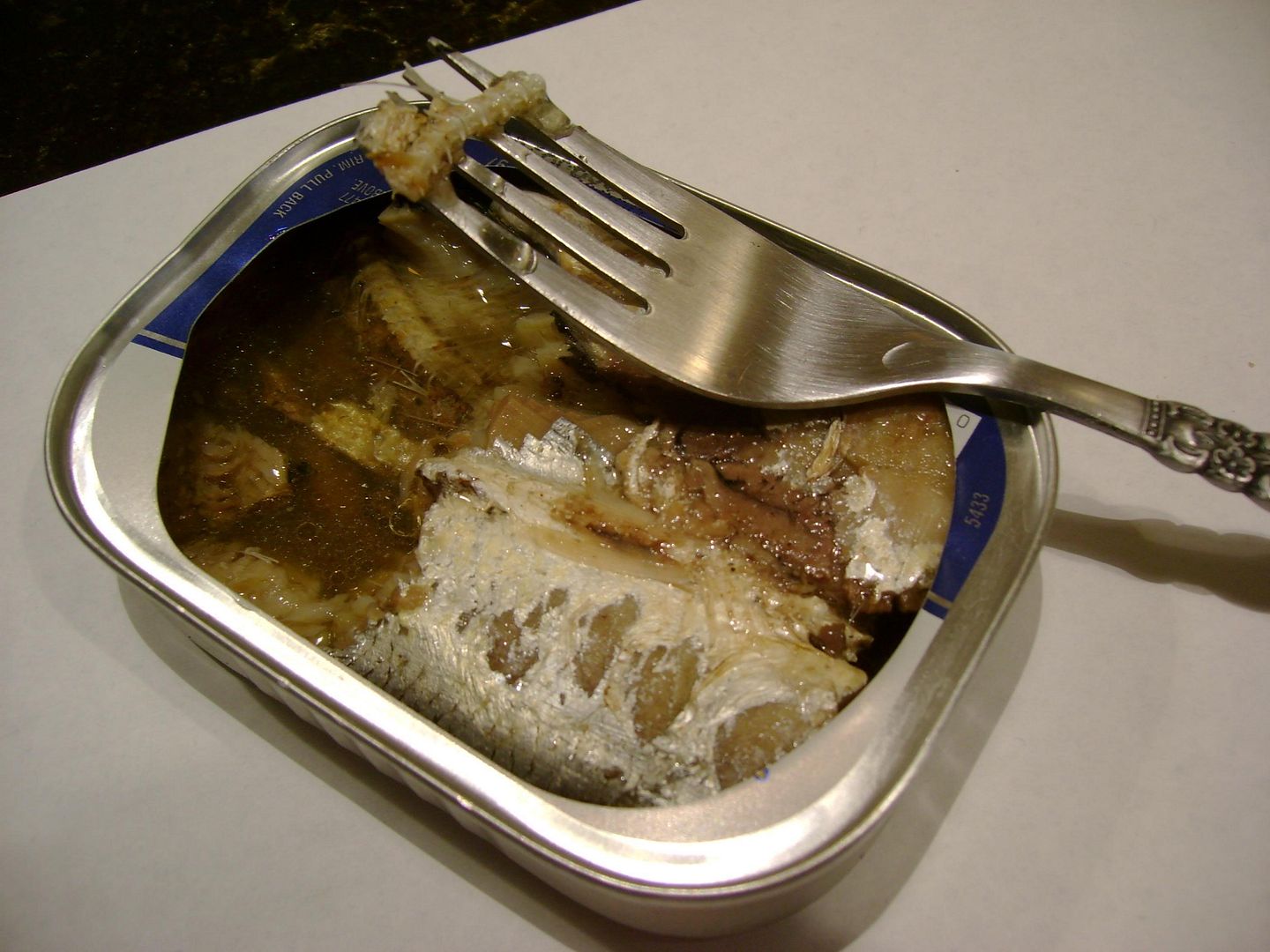
I had a good experience with those sardines in tomato sauce I ate before. I think some of it might have had to do with how it was King Oscar brand and that just seems real classy to me. So I got sardines again, but these ones are big and in soybean oil instead of tomato sauce.
I first thought something was wrong when I opened it up and it smelled awful. I didn't realize there were tons of bones in it until I started eating a bit and had a bunch of little crunchy things in my mouth. They're like tiny little rib bones all over the place and I was eating them.
Here's what was going through my head while I ate it:
"I'm going to do it. I'm going to eat those sardines. Ugh, this is so disgusting. It smells so bad. They're huge disgusting pieces of sardines. It makes me want to vomit, looking at it with the smell too. ...here I go. ... That was rough. I shuddered when I was eating it. Okay, time for a second bite. Maybe I liked them more last time because they were in tomato sauce - this time it's soybean oil. I don't know.. I don't know if I can do it - finish the can. ... ughhhhh, spine bones! It looks like a bunch of dead rotting fish. mannn.. ughh.. no, I can do it. I don't give up on food. ... mann, freaking bones. I hate bones in fish - they're small and everywhere sometimes. When you eat chicken, you know where the bones are gonna be and it's cool. Also you don't run into spine bones. I swear, I'm supposed to be looking at food, but all I'm seeing is the cover of Doom II Master Levels. ... man, ughh. little crunchy things I'm chewing on. ... man, freaking bones! I feel like I've been through this scenario before. And it's like, why the hell is this part all purple/dark red colored? Am I supposed to eat that?? I don't even know what to do. Man, these spines. And all those tiny little ribs. Okay, so I've eaten like two thirds of it so far. I can do it. ... man, okay. ... I ate all the meat. I did it. I'm not feeling so good. I need to rest or something."
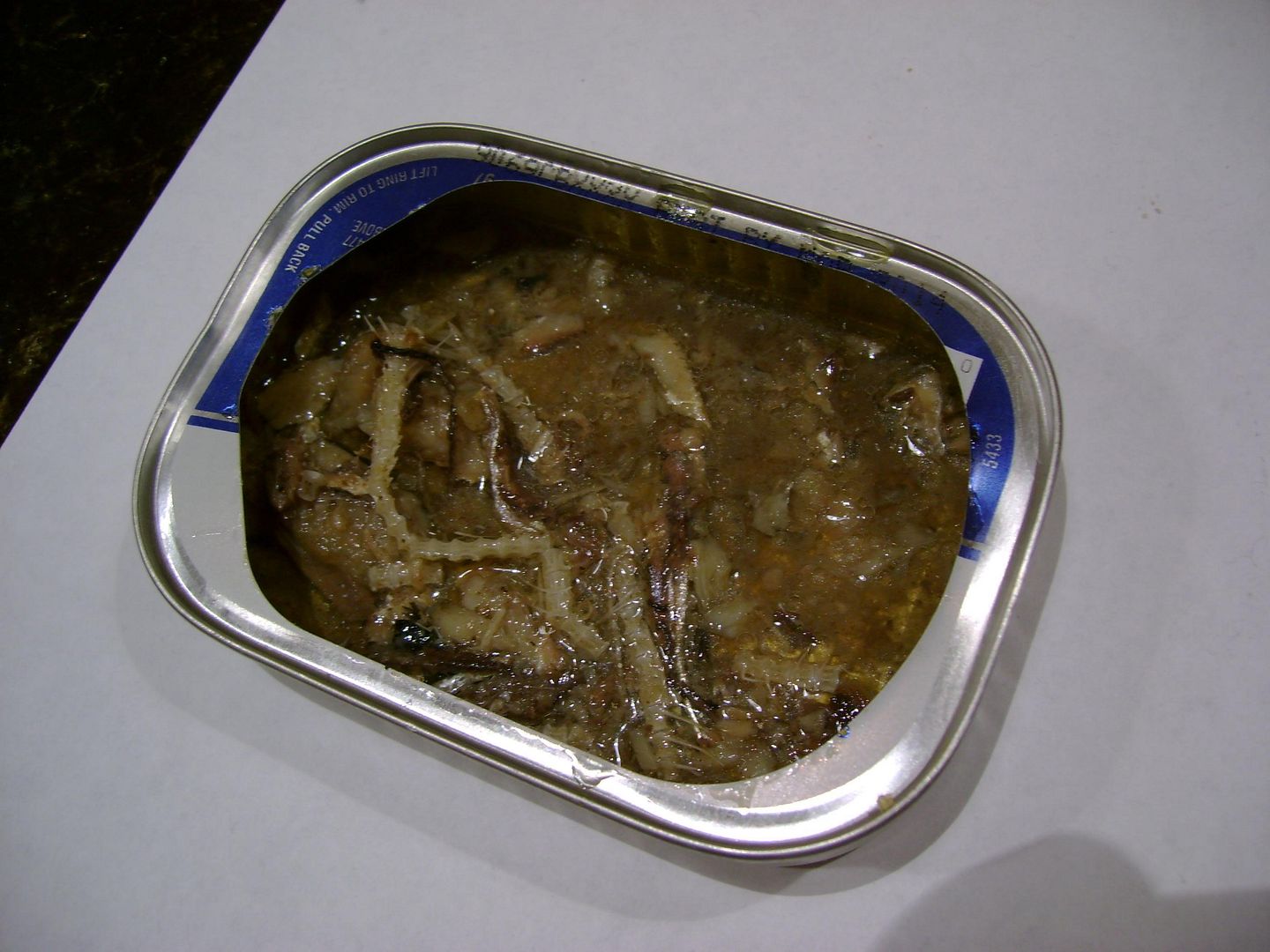
There's a million little bones in this and they break off the spine so easily that it's impossible to remove them all. And after I was done, it looked like some kind of boneyard. It was disgusting, and I rate this food item zero of two.
Monday, April 19, 2010
BLOOM TIME

Press Release
Ireland’s Biggest Garden Festival to Bloom in June
Win FREE tickets to this years Bloom Festival on the gardening.ie site
Embargo Tuesday 20th April 6pm Bord Bia today announced its plans for Bloom 2010 which will take place in the Phoenix Park, Dublin over the June bank holiday weekend. In addition to the stunning show gardens and an enhanced artisan food offering, ‘Sustainability’, ‘Local Food’ and ‘Grow Your Own’, are central themes to this year’s event, which has attracted over 150,000 visitors since its inaugural staging in 2007.
According to Aidan Cotter, Chief Executive, Bord Bia “the themes for Bloom 2010 reflect current consumer sentiment and the interaction between horticulture, food and the environment. Bloom aims to educate, inspire and inform visitors and with something planned for all ages, we trust visitors will enjoy the wide and expanded range of features and exhibits Bloom 2010 has to offer.”
Flora and Fauna
The show gardens at Bloom are the very essence of the show. Ireland's top horticultural talent will deliver elaborate displays and the very best in cutting edge garden design. According to Gary Graham, Bloom Project Manager, Bord Bia “visitors to the show this year will be amazed at the vibrancy and intricacy of the designs. Designers from across the country will produce a selection of some of the most visually impressive show pieces that our rich stock of garden design professionals have to offer.”
Bloom 2010 will include 25 large, medium and small show gardens, which will be complemented by a spectacular floral pavilion featuring 50 displays and the best of Irish plants and flowers. Both the show gardens and the floral displays will be judged by international independent judging panels, including Chelsea Flower Show adjudicator, Andrew Wilson. Gold, silver gilt, silver and bronze medals will be awarded based on strict guidelines addressing both horticultural skills and design superiority. In 2009, 51 medals were awarded.
GIY Ireland, a network of grow-it-yourselfers, has joined forces with previous Bloom medal winner Fiann Ó Nualláin, to create a totally ‘Edible Garden’ for this year’s show. “The garden is designed as a classic suburban garden to show visitors just how much GIY-ing can be done in that environment and how a productive suburban vegetable patch can also be an attractive garden” commented Michael Kelly, Founder of GIY Ireland.
GIY-ers nationwide are currently growing vegetables for the Bloom exhibit. Supporters in Ballinasloe, Co. Galway are busy growing peas for the Edible Garden; red onions will come from Boyle, Co. Roscommon; leeks have been assigned to the Carrick on Suir contingent and the people of Kilmacthomas, Co. Waterford have been charged with producing the perfect potatoes! In total growers from 52 locations around Ireland are currently cultivating over 50 different types of vegetable in time for the Bloom harvest. The same group of growers and volunteers will also be involved in the construction of the Edible Garden.
Locally grown fresh produce and plants will feature strongly at Bloom 2010. Bord Bia’s “Best in Season” fresh produce marquee will promote the consumption of fruit and vegetables and highlight the nutritional benefits of eating the recommended daily amounts. The feature will include a fabulous display of the full range of fruit and vegetables grown by Irish producers. Helpers will be on hand to provide information on Ireland’s fresh produce industry and to highlight what’s Best in Season when! A ‘Garden Time’ feature will also highlight the wide range of ornamental plants grown in Ireland and the suitability of these plants for the Irish climate.
Also new for 2010, is Bord Bia’s ‘Sustainable Garden’, which aims to highlight the positive impact consumers can have on the environment by thinking about their purchasing choices. Bord Bia is also currently working with the Carbon Trust to measure the carbon footprint of Bloom and will use the results to plan future events. A series of measures have been put in place to reduce the carbon footprint of this year’s event including waste management controls, monitoring the reuse of materials after the event and increasing the use of public transport to travel to and from Bloom.
The Office of Public Works (OPW), which provides the 70 acre site for Bloom, will once again open its walled kitchen garden to the public, which has been restored to its original Victorian style. The garden will allow visitors to learn more about the growing of fruit, vegetables and flowers and during the 5-day event, the Phoenix Park gardeners will be on hand to answer any questions.
The Garden Expert Stage will also host a comprehensive range of leading experts in horticulture, gardening and floristry. Speakers will include UK TV presenter James Alexander Sinclair; Ireland’s gardening guru Gerry Daly and Shawna Lee Coronado, American author of the critically acclaimed book, Gardening Nude, a guide for living a green lifestyle.
Family Show
Once again, children can enter Bloom free of charge and this year the event will incorporate many more family orientated attractions and activities. The Irish Preschool Play Association (IPPA) will be onsite with an imaginative and interactive garden, including hay castles and willow huts. The garden will be constructed on a minuscule budget using natural materials. The IPPA hope to encourage families, playgroups, county councils and crèches to replicate the simple play garden concept to provide young children nationwide with more play areas.
Imaginosity, the children’s museum based in Sandyford, Co. Dublin, will return with a “Good to Grow” feature for Bloom 2010. Daily workshops and classes for children will vary from how to grow your own vegetables to building a bird’s nest. Mini Bloom fans can also enjoy puppet shows, storytelling tents and help create a ‘Scented Garden’.
Earlier this year the Irish fruit and vegetable industry, Bord Bia and educational body Agri Aware challenged school pupils nationwide to not only eat their fruit and vegetables, but to know and grow their own. As part of the “Incredible Edibles” challenge every primary school received a box including everything a class needs to grow their five-a-day. The “Incredible Edible” characters will be at Bloom to show all the younger visitors how to grow and sow fruit and vegetables.
Bloom neighbours - Dublin Zoo - will host a number of children’s workshops throughout the weekend and this year visitors will have the opportunity to meet, and feed, a number of farm animals at the mini Bloom farm.
Food & Drink at Bloom
The Food Market is now firmly established as a key attraction at Bloom and this year’s Food Market will be Bloom’s biggest yet! With over 40 artisan food producers, the market highlights the very best that small artisan producers from around Ireland have to offer. The producers themselves will be on hand to provide tastings and give tips on how to prepare tasty dishes using their products. The market will include a huge variety of foods from handmade chocolates, and baked goods to farmhouse cheeses and the finest Irish honey.
A ‘Craft Beer Garden’ will allow Bloom visitors over the age of 18 to enjoy the very best of independent Irish beers, spirits, and liqueurs. This new space will be located near the music stage and the artisan catering offering, a perfect addition to this relaxed picnic area.
Each day, Bord Bia will also host four live demonstrations on the Bloom cookery stage. Featured chefs will include award winning chef Neven Maguire; Darina Allen, Ballymaloe Cookery School; food blogger and author of “Good Mood Food” Donal Skehan and well known TV chef Jenny Bristow. The dishes prepared by the celebrity chefs will promote quality assured local produce and will be available to order each day in Bistro Bloom.
There will be an particular emphasis on artisan food within ‘The Food Village’, the area incorporating all the outdoor catering options, where food producers will “serve slow food fast”.
A new feature for 2010 - Bord Bia will seek to bring food to life through a series of talks and demonstrations which will take place alongside the Food Market. The purpose of the showcase is to recreate the link for visitors between the food products on sale at the Market and the craft skills used in their creation. The demonstrations will also bring to life ‘forgotten’ food skills from Ireland’s past.
Skills on show will include cheese making, butter churning, apple pressing and fish smoking. The demonstrators and talks will be delivered by a mix of current artisan producers and domestic practitioners.
Sponsors
The Bloom 2010 key sponsors include the OPW, Love Irish Food, Woodies, Failte Ireland, the Travel Department and Specsavers.
Tickets on sale now
Tickets are on sale on www.bloominthepark.com or by calling 0818 300 260, with significant discounts available in advance of the show. No booking fee applies and children go free.
Bloom 2010 will run from Thursday June 3rd – Monday June 7th.
See more photo's of past BLOOMS
Saturday, April 17, 2010
Peanut Butter Sauce Pasta
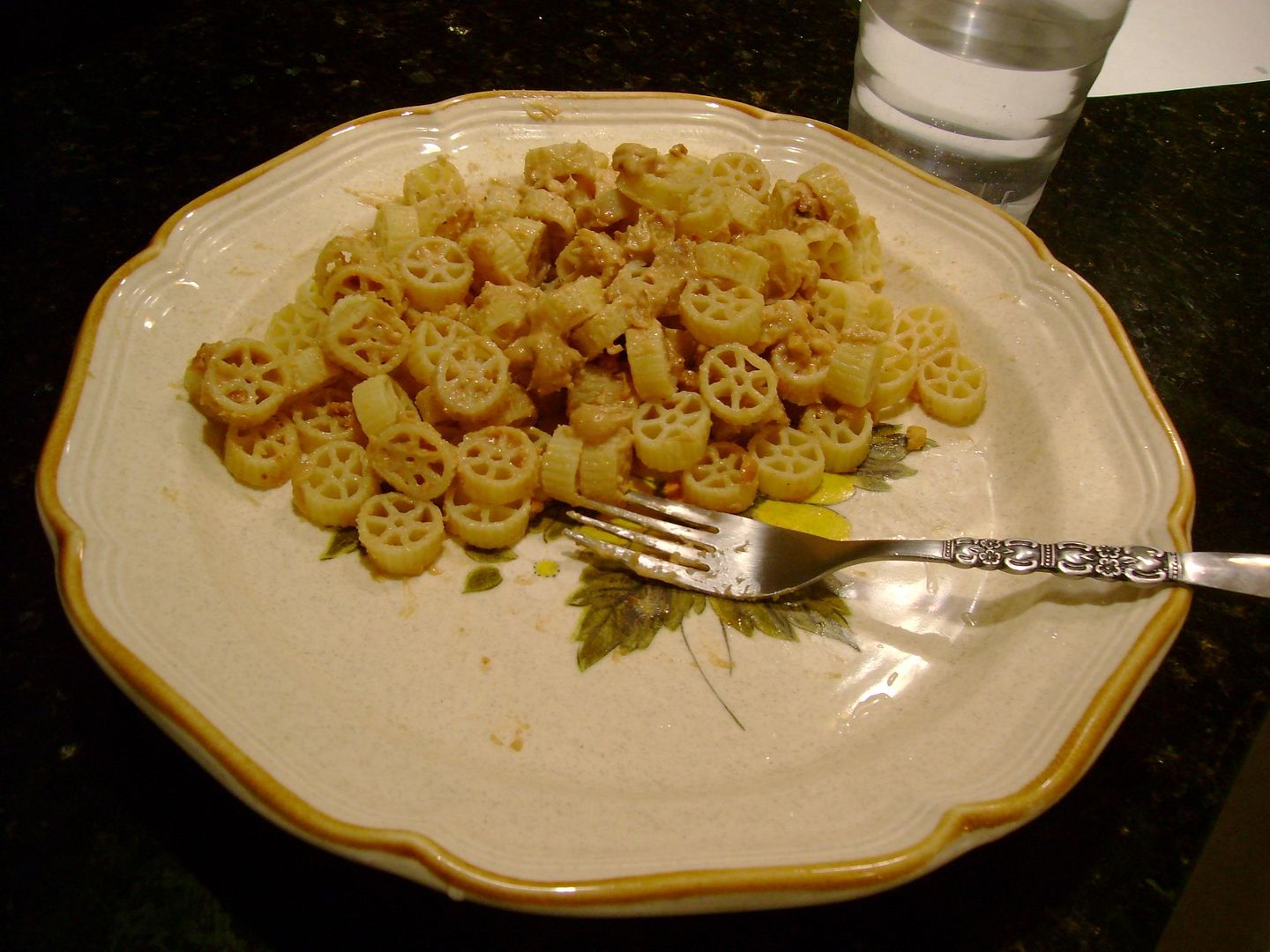
I just got like three jars of peanut butter, so I'm all excited to eat a lot of peanut butter. I looked up online some recipe for a peanut butter sauce to use on pasta, but I didn't remember exactly what all the instructions were for it while I was in the kitchen. It probably doesn't matter because I wasn't about to start measuring things anyway.
Okay, so first, I cooked some pasta. It's wheels. I kept some of the boiling water in a glass cup so I could use it for my sauce.
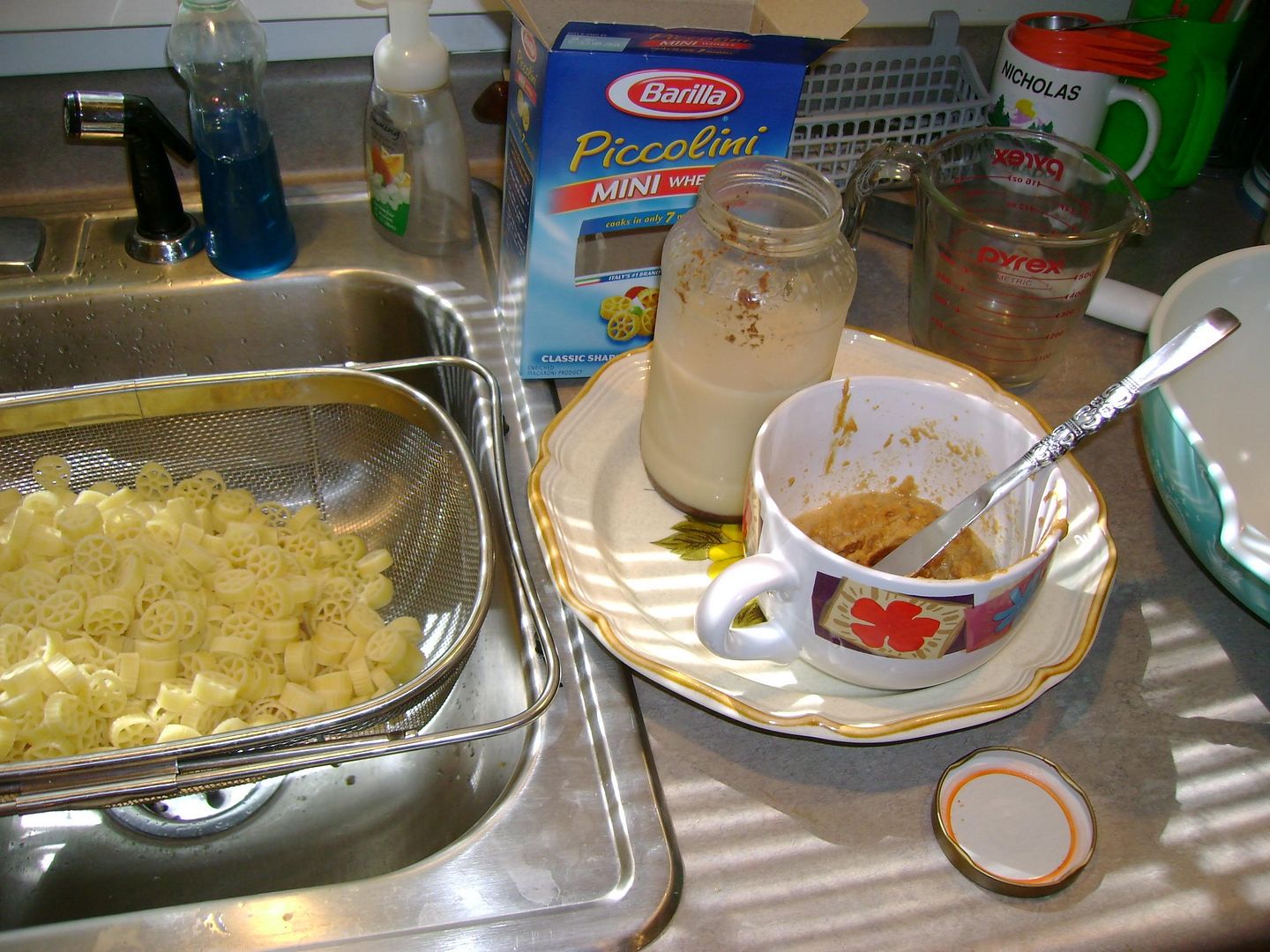
Then for the sauce, I dumped in a bunch of chunky peanut butter because I thought it would be neat to have a bunch of little peanut pieces in the end. Then I poured in about the same amount of hot water as there was peanut butter. I was going to use some half and half next, but mine was chunky and smelled like old yogurt, so that's no good. Instead I used a glob of bacon grease from when I ate a ton of bacon. I remembered it said something about soy sauce and garlic cloves, so I poured in a bit of a pack of soy sauce and then some garlic herb powder I had. And also cock sauce.
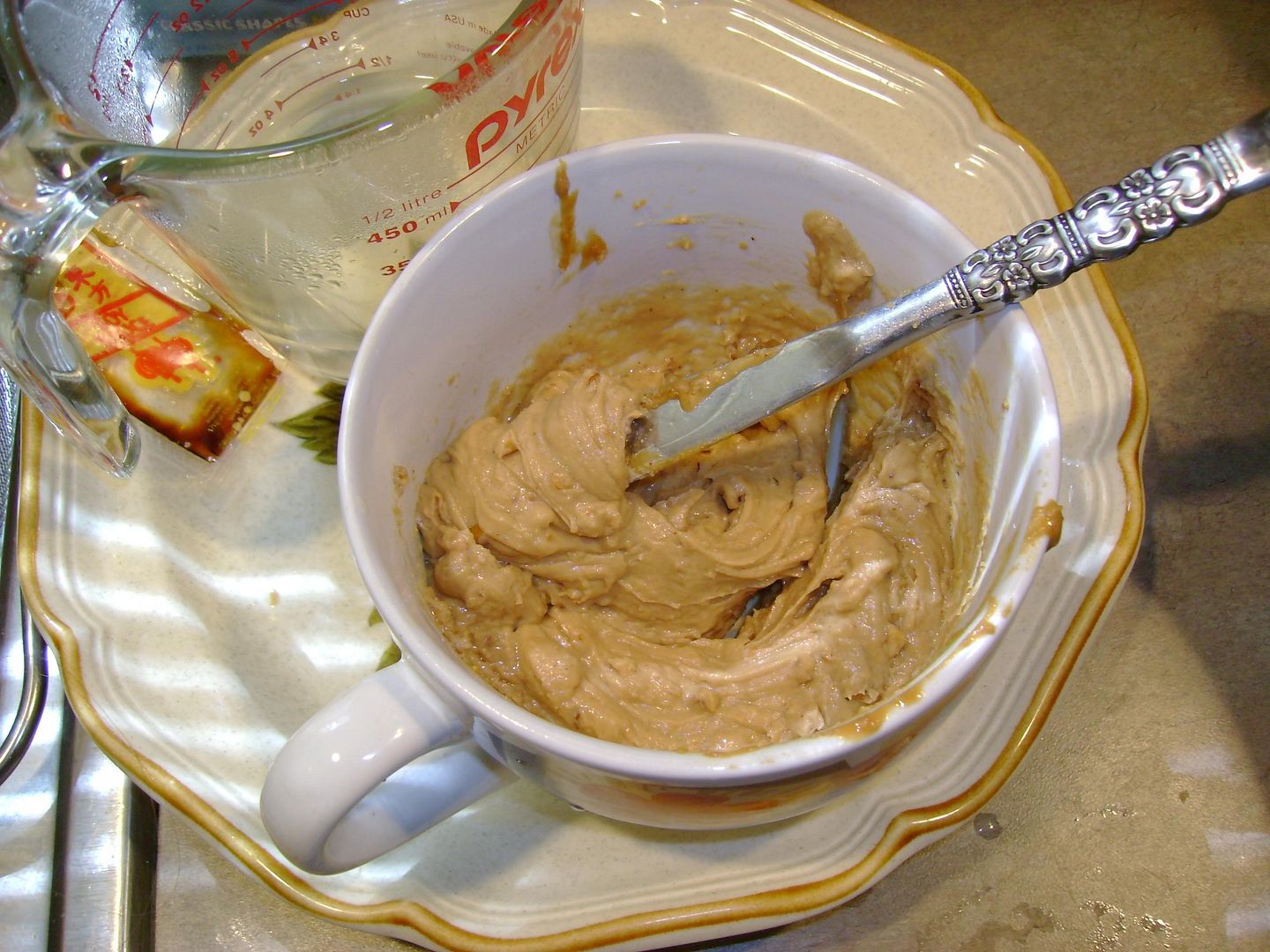
So the sauce recipe is like this:
- chunky peanut butter
- hot water from the pasta
- bacon grease
- soy sauce
- garlic herb powder
- cock sauce
There are no amounts or measurements! You're supposed to eyeball it and taste it a ton as you do it!
I rate it two of two because I love peanut butter and I'm proud of myself for this after my last pasta disaster.
WISDOM OF THE WORLD - WEEK 102

LOSING EVERYTHING
Mula came upon a frowning man walking along the road to town. "What's wrong?" he asked. The man held up a tattered bag and moaned, "All that I own in this wide world barely fills this miserable, wretched sack."
"Too bad," said Mula, and with that, he snatched the bag from the man's hands and ran down the road with it.
Having lost everything, the man burst into tears and, more miserable than before, continued walking. Meanwhile, Mula quickly ran around the bend and placed the man's sack in the middle of the road where he would have to come upon it.
When the man saw his bag sitting in the road before him, he laughed with joy, and shouted, "My sack! I thought I'd lost you!"
Watching through the bushes, Mula chuckled. "Well, that's one way to make someone happy!"
Thursday, April 15, 2010


Saturday, April 10, 2010
WISDOM OF THE WORLD - WEEK 102

WHISPER OR BRICK
A young and successful executive was travelling down a street, going a bit too fast in his new Jaguar. He was watching for kids darting out from between parked cars and slowed down when he thought he saw something. As his car passed, no children appeared. Instead, a brick smashed into the Jag's side door!
He slammed on the brakes and spun the Jag back to the spot from where the brick had been thrown. He jumped out of the car, grabbed some kid and pushed him up against a parked car shouting,
"What was that all about and who are you? Just what do you think you are doing?" Building up a head of steam, he went on. "That's a new car and that brick you threw is going to cost a lot of money. Why did you do it?"
"Please, mister, please. I'm sorry, but I didn't know what else to do!" pleaded the youngster. "I threw the brick because no one else would stop." Tears were dripping down the boy's chin as he pointed around the parked car. "It's my brother," he said. "He rolled off the pavement and fell out of his wheelchair and I can't lift him up." Sobbing, the boy asked the executive, "Would you please help me get him back into his wheelchair? He's hurt and he's too heavy for me."
Moved beyond words, the driver tried to swallow the rapidly swelling lump in his throat. He lifted the young man back into the wheelchair and took out his handkerchief and wiped the scrapes and cuts, checking to see that everything was going to be okay. "Thank you and God bless you," the grateful child said to him. The man then watched the little boy push his brother down the sidewalk toward their home.
It was a long walk back for the man to his Jaguar...a long, slow walk. He never did repair the side door. He kept the dent to remind him not to go through life so fast that someone has to throw a brick at you to get your attention.
Thursday, April 8, 2010
Inishowen Environmental Group meeting about mining

From Bev Doherty (IEG)
Dear Inishowen/Derry friend, and others who would have an interest in this matter.
You may be aware that Grosvenor Exploration and Mining Services (Ireland) Limited is to be granted a prospecting licence to search many townlands in Inishowen for minerals such as gold, diamonds and other gems. Please see press articles below.
At the Inishowen Environmental Group's meeting last night we came up with a series of points and questions for the press and individuals.
Please read our statement and if you are concerned.
The Meeting Points
The Inishowen Environmental Group met and agreed a position on the proposed granting of an exploration licence to Grosvenor Mining and Exploration (Ireland) Limited.
The members wish to emphasise that the writing of objections to the Department should be made on an individual basis. While the Government may proceed with the granting of exploration licences despite any objections, the fact that the objections have been made could be important if matters move on to the consideration of granting mining licences. We find it strange that the notice of issue of prospecting licences was not sent to the local Inishowen papers, but now that is to be rectified we have a further 21 days to lodge an objection. We would ask that objections should be informed by an awareness of the following points:
Ø If a licence to explore most of Inishowen is granted, no landowner can legally object to a representative of the company entering his or her land and searching for the presence of minerals, whether they be gems, diamonds or gold;
Ø The ability of exploration individuals to enter onto private land without permission does not extend to digging or trenching or any other form of invasive activity;
Ø We should be told more about this company, as there is a well-documented history of companies in this area fronting other, more contentious companies – and unfortunately this can sometimes mean facilitating the sale of things like “blood diamonds” where diamonds which cannot be legally sold because of their provenance in somewhere like Sierra Leone, can be “found” in another – this time legal – spot, and sold on (present knowledge would indicate that the two directors are Australian, resident in Perth, and with a history of expertise in diamond mining). An almost contemporaneous application for mineral exploration in SW Donegal is being made by Mylitus Mining, whose connections extend ultimately to Ghana, Sierra Leone, Namibia, Liberia and Angola – none of this information is given upfront.
Ø There is at present no map available for consultation in Carndonagh, a legal requirement on the part of the Department.
Ø Why should a repeat exercise in exploring exactly the same townlands as those surveyed in 1997 by Cambridge Mineral Resources through an aerial survey for diamonds be carried out again?
Ø Why did Cambridge Mineral Resources pass on its surveyed material to Moville Minerals Limited in the period 1998 to 2000, but this time not for diamonds, but for gold – without any public announcement, despite the Klondyke type advance notices prior to Cambridge embarking on its aerial survey? We were never told, despite promises, exactly what Cambridge found when they sent their results to Australia for analysis.
Ø Mining for gold is environmentally hazardous in the extreme – is this the real objective behind the exploration?
Ø Does the Department think that the Inishowen road infrastructure, particularly in the small local roads likely to be used, is up to carrying the heavy lorries need to carry away overburden?
Ø What is the position of our local political representatives on this, and if they don’t know, why not? It is difficult for private individuals to inform themselves.
Ø Where does the Green Box thinking enter into the exploitative nature of prospecting and possible mining of a non-essential material, be it diamonds or gold? The emphasis in Inishowen should be on fishing, farming and tourism, not spoiling one of Ireland’s hidden assets. At least one commercial organic farm is situated within one of the listed townlands; would any pollution from mining cause them to lose their organic status?
Ø Has there been an attempt on the part of this company to let local communities know what is involved, and if possible, alleviate their fears? We need only to refer to Donegal County Council’s attempt to impose a landfill site at the top of Glentogher in 1991, using legal tactics, only to be turned down eventually through the insistence of local people that their environment was seriously at risk because of unacknowledged geological instabilities leading to contamination of their water supply for people and animals. A more recent example of lack of transparency, consultation and dialogue in Co Mayo is the government’s handling of the gas pipeline project in Rossport.
Ø If there is the usual offer of jobs, is it not the case that these go to specialised outside people, well-qualified in these fields? We may be in a time of recession, but we can still see through empty promises.
Ø At a time when we should be seriously facing a future without oil and one which must get to grips with climate change, it seems frivolous to explore for diamonds which only the super-rich can buy. Synthetic diamond manufacture can easily supply industry’s needs for diamonds.
Objections should be sent before April 30th to:
Department of Communications, Energy and Natural Resources,
Beggars Bush,
Haddington Road,
Dublin 4
Phone no: 01-6782668
Press release Bev Doherty 25th April
Meeting about Gold prospecting well attended.
Over 80 people attended a meeting last Friday night in Carrowmenagh to find out why the Department of Communications, Energy and Natural Resources want to grant licences to Grosvenor Mining PLC to search for gold, diamonds and gem minerals in townlands stretching from Malin Head to Lough Foyle.
The meeting, called by concerned residents of the area and chaired by Mary Crumlish was also well attended by local councillors. Apologies were sent by Deputy Cecelia Keaveny, Padraig McLochlainn and Joe McHugh.
Guest speaker Mike Doherty from Glentogher, Carndonagh, outlined the legal procedures involved in prospecting and the rights of landowners to refuse access to prospectors if they wished. A bill has been drawn up allowing farmers to refuse access, but it has not become law yet.
Several short films were shown, one showing the discovery and subsequent mining of gold in Co. Tyrone, just a few miles outside Omagh Town , another contained interviews with landowners in South Africa whose land has been damaged by a local goldmine. One man, who grows vegetables commercially, was told that he wouldn't be able to clean out his irrigation dam because the sediment gathering behind it was radioactive. The mining had displaced uranium particles and he hadn't been informed. Displacement of other minerals often happens with gold mining. In fact, the mine in Omagh has so far produced 1800 times more lead than gold!
Councillors Bernard McGuinness and Mickey Doherty admitted that they knew nothing of the application for licences until they were invited to the meeting, and no-one in the room knew that there were already two licences active in Inishowen, owned by another company.
Councillor Charlie McConalogue again outlined the legalities surrounding the prospecting and mining of gold, saying that he needed to do more research before he could decide if the possibility of a gold mine in Inishowen was a good thing or a bad thing. This view was held by a few, but the vast majority at the meeting agreed that it would be better to avoid a situation where mining could become a reality by urging the government to refuse the licences in the first place.
Mike Doherty cautioned that unless many letters of opposition were sent to the Department, nothing would be done to stop licences being granted. He said that an attempt by residents in South Donegal to stop the issue of licences there failed because the Department only received thirteen individual letters. Apparently petition-style letters sent in by concerned groups didn't count.
Photocopies of basic letter of objection were circulated and more are available by contacting Mary Crumlish at 9381457.Last date objections will be received is May 6th.
You are invited to add your voice to the effort by writing or emailing your objections to the Exploration and Mining Division, Department of Communications, Energy and Natural Resources
Beggar's Bush
Haddington Road
Dublin 4
Tel: 01 6782666
Fax: 01-6609627
fiona.mcguinness@dcenr.gov.ie
At start, brief introduction by Mary Crumlish, chairperson, then showing of 2 video clips, allowing people to settle and providing some background information.
a) Short video clip from Overhead Britain (5 mins) on the finding of gold in the Sperrins and the beginning of the Omagh goldmine. Promising announcement of 600,000 oz. of gold in the likely lifetime of the mine, 30,000 oz. per year. This is held on a private copy for which permission was obtained from the maker for the except to be shown. Overall impression: nice, clean business, all good for the people of Northern Ireland .
b) 18 minute downloaded video on Wonderfontein Spruit goldmine experiences. video.google.com/videoplay?docid=6085154693477011286
1. Grosvenor Prospecting Licence Numbers and Midas.jpg
This map shows the numbering of the various Prospecting Licence Areas in Inishowen. Grosvenor Exploration and Mining (Ireland) Limited have applied for a Prospecting Licence in each of PLAs 3586, 3496, 3094, 3062, 3007, 2964 and 3008. This has cost the company €190 for each of the area applications, and if granted, the licences will be valid for 6 years.
The press notice allows for objections to the granting of these licences up to 5th May.
If exploration proves successful for Grosvenor, it may then apply for Mining Licences for any areas in which a successful exploration is carried out.
What you should notice are the 2 PLAs with the word “Midas”, short for Midas Mineral Resources Limited. These cover numbers 3063, 3820. Prospecting Licences were granted to this company last year, unknown to most of us and certainly to me. They have slipped under our radar.
2. Map PLA 3008.jpg
This covers the area in which we are now. The first public information session on this exploration attempt is taking place, because a number of us felt sufficiently alarmed at the total lack of information available either from the Department of Communications, Energy and Natural Resources, our local authority, the company itself, or indeed from our public representatives. This is an information session. At the end of it, each individual should be able to decide to object or not to the granting of a PL on the basis of sufficient information.
We should be able to demand full disclosure of all information related to the company’s plans and licences provided by the government. The EC directives pertaining to the Arrhus Convention, which Ireland has signed up to in 2001, but not yet ratified – alone of all EC countries – http://ec.europa.eu/environment/aarhus/index.htm
1) emphasise the right of everyone to receive environmental information that is held by public authorities ("access to environmental information"). This can include information on the state of the environment, but also on policies or measures taken, or on the state of human health and safety where this can be affected by the state of the environment. Applicants are entitled to obtain this information within one month of the request and without having to say why they require it. In addition, public authorities are obliged, under the Convention, to actively disseminate environmental information in their possession;
2) the right to participate in environmental decision-making. Arrangements are to be made by public authorities to enable the public affected and environmental non-governmental organisations to comment on, for example, proposals for projects affecting the environment, or plans and programmes relating to the environment, these comments to be taken into due account in decision-making, and information to be provided on the final decisions and the reasons for it ("public participation in environmental decision-making");
3) the right to review procedures to challenge public decisions that have been made without respecting the two aforementioned rights or environmental law in general ("access to justice").
How come Midas got the Prospecting Licences to 2 areas in Inishowen without us knowing?
3. The Company. Grosvenor Exploration & Mining Services ( Ireland ) Limited.pdf [information got by paying privately solocheck.ie]
Not so Irish: the two directors, Mr and Mrs. Spencer, have a residential address in Perth, Australia, and Roy George Stamford Spencer got his BSc degree at Natal University in South Africa in 1971. He has been a director and/or on committees around the world in various diamond mining companies. Their capital of €100k does not seem a large investment, considering that the company has to have adequate insurance cover to protect against claims or mishaps. No telephone number has been given for the company address in Dundalk, Co Louth.
Before moving on to what is involved in exploration licences, I’d like to give a short summary of the various surveys done over the past 20 years in Inishowen. In 1997 we had a flurry of headlines calling Inishowen a possible Klondyke, a promising new source of diamonds and so on. The first company, Cambridge Mineral Resources Plc, did a 2 year aerial survey of 10 PLAs, and pronounced the findings promising enough to have them sent to Australia (or was it Canada ? It’s very hard to pin down the information). Nothing seemed to come of this, until a new (or was it new?) company called Moville Resources – nothing to do with our Moville but a Moville in Australia – obtained 2 PLs for Inishowen, this time looking for gold. They used the data provided by Cambridge ’s research. Their licences ceased 5 years ago.
Bringing us up to date is Midas Minerals’ 2 Prospecting Licences. I can find very little on this company, other than that it has a capital of E10Million, and is based in Galway . The directors appear to be Irish, and their interest is in gold.
And now Grosvenor. We need to know if it is a junior company that is looking for a find to sell on to a larger company that would actually mine, or does it already have the backing of a larger company, where do they raise their money? If there is an international company behind it, then there may be support groups that look at the operations of that company that can be contacted for support and information.
It’s important to express objections early so that they are on record in written form. Objections could be on the basis of impacts not just from exploration but also on potential impacts of mining. If exploration shows that there are minerals and if it is economical to exploit them then the chances are mining will proceed - otherwise why explore. We must, if possible, avoid falling for the argument that it is only exploration, and that longer term impacts will not be considered at this stage.
4. MINERAL EXPLORATION ENVIRONMENTAL GUIDELINES doc.
I make no apology for showing and reading through these guidelines. They come from a detailed list given by the Government DCENR to any company applying for a prospecting licence; I have given the website address for the document, which runs to 4 pages. The main points are given below. In general, anyone with an exploration licence has the right to access to your land. The State owns the minerals that lie below the topsoil. If it decides to grant a mining licence, then it has right to extract any minerals that may be below your house, your property, your farm.
MINERAL EXPLORATION ENVIRONMENTAL GUIDELINES (summarised)
See http://www.mineralsireland.ie/Exploration+Licensing+Process/Guidelines+for+Exploration.htm
GENERAL
All environmental standards to be adhered to, with adequate insurance cover to be in place.
There must be close liaison between the company and relevant landowners, and regulatory authorities.
COMMENCEMENT AND SUPERVISION
Agreement to be reached with landowners before entering lands for geological mapping, surveying, trenching, drilling. Agricultural activities take first place. Prior compensation to be agreed before drilling or trenching takes place, and there must be an appointed field supervisor who gives his name, the company address and telephone number to landowners.
Field equipment not to be left unattended in fields or roadsides (apart from heavy drill or excavating rigs). Everything to be cleared up at the end.
Before starting to drill or excavate, the field supervisor should discuss and identify powerlines, entry points, stock watering points, pipelines etc. Particular attention to be given to crop harvesting, foaling/lambing/calving, possible disease spread etc.
Careful checks to be made for sensitive ecological sites or archaeological features.
The field supervisor must inform the landowner about remedial measures to be taken if water or land pollution should occur.
DRILLING
This must take place downhill from water sources or limestone area, uphill from pollution sites. A full photographic record must be kept.
All access roads must be agreed beforehand with the landowner.
There are strict regulations regarding fuel storage and spillage, and likewise with any removal of water.
Noise must be minimal and not happen during unsocial hours.
Drilling areas are to be fenced against grazing animals.
EXCAVATIONS
Same safety regulations as for drilling, and preferably to take place during dry weather. A full photographic record must be kept.
Topsoil and subsoil to be kept separate, and restored on completion to satisfaction of landowner. If excavations have to be left open after exploration and before proceeding to mining, planning permission must be sought: advice to be obtained from the Local Authority. N.B. Planning Permission doesn’t have to be sought in other instances, except in the case of Restricted areas (below).
WATER SERVICES
Alternative water supplies to be made available immediately if any damage is done to original supplies.
PUMPING AND OTHER GROUNDWATER TESTS
Emergency backup to be available at all times. Local Authority to be informed before tests for arrangements and approval.
RESTRICTED AREAS
These are Special Areas of Conservation or Special Protection Areas. There are restrictions here, and approval is needed in writing 1 month beforehand from the Exploration and Mining Division.
REPS: no work to be done without the prior approval of the landowner.
Here I have to say that I don’t fully understand the status of the lands that will be explored - are these private property - what are the implications if land owners do not want to allow exploration activities? Are there communal owned lands involved - what if people with usage rights to these lands refuse to allow exploration activities? Again it seems to me that the public consultation process required by the Aarhus Convention would offer such answers. Perhaps someone in the hall could inform us after this presentation.
5. Video UTV interview. http://www.youtube.com/watch?v=QD9AmqIV-R4&feature=related
The history of gold mining generally throughout the world is not a happy one, and here I’d like to – I must – consider what is taking place about 50 miles from here, at Cavanacaw Gold Mines in Co Tyrone, just a few miles SW of Omagh. The names of the company keeps changing, but at the beginning it was Rio Tinto Zinc that proposed the area as one meriting exploration for gold. Open-cast goldmining operation at Cavanacaw was granted planning permission in the face of very strong local opposition in 1995, after a public enquiry in 1994. The sites covers 60 hectares, almost 150 acres, the excavation 40m deep, 850m long and up to 100m wide. Neither cyanide or mercury is used; instead, after crushing the rock, a flotation method to separate metals from unwanted materials results in a separation of metallic particles from tailings. A lot of water is required. The foam is then taken from the top of the cell, cleaned and dewatered. The metallic concentrate goes to Canada for treatment and extraction of gold.
In the Omagh mine the ore is graded at up to 7g/tonne. This means you get 7 grams of gold out of one tonne of rock. In fact you need to move far more than one tonne of rock to get those 7 grams. The gold in the ore is actually not visible to the naked eye (as in most gold deposits, gold starts to be visible only when the grade reaches 30g/t).
6. Cavanacaw opencast Gold/Lead Mine Grazing.jpg or http://leadminegrazing.blogspot.com/
At Stormont on 02/06/09 Dr Kieran Deeny MLA said, “Metals other than gold are released when rock is crushed, including lead, cadmium, nickel and arsenic, which are all potentially toxic and dangerous. Heavy metals in such unnatural concentrations can pose enormous problems because they will not break down or disappear completely. All the heavy metals released are also present in dust and sediment. An open pit operation such as the one in Cavanacaw, produces a lot of dust and especially in a windy location such as this one fugitive dust is a problem. It is easily transmitted and poses a danger for surface vegetation, crops, livestock, and humans. Pregnant women, the elderly, and sufferers from asthma are particularly at risk.
Condition 28 of the planning consent stipulated that fixed water sprays be installed on the haul roads to limit dust transmission – this was never carried out. Condition 29 stipulates that stockpiles of rock shall be sown with a range of plants to limit the transmission of dust outside the site boundary, this was never done and Condition 30 says the ore stockpile shall be retained in a covered area for the same reason, this wasn’t done either, (these three Planning breaches were confirmed by Planning service.) Nobody can have any idea how much toxic dust blew across the fields in this windy location or indeed how much of it entered the food chain through crops or cattle and sheep grazing as environmental health officer David Gillis (Omagh District Council) confirmed that little or no monitoring of the site had ever taken place”. (End Dr Deeny’s quotation).
Omagh Minerals has an appalling track record on planning breaches generally, 12 recorded in 2009.
At the September meeting of Omagh District Council Cavanacaw Goldmine Sub Committee, councillors were shocked to learn that large quantities of highly toxic lead were being extracted from the mine. The company's own sales figures for the second quarter of 2009 showed sales of 1,977 troy ounces of gold, 5,972 troy ounces of silver and 90.4 tonnes of lead. Nobody had ever envisaged that such a high percentage of lead would be produced at the mine. These figures equate to 1800 times more lead than gold being produced. The figures published by the company for the 2nd quarter of 2009 give the amount of gold at 1,977 troy ounces of gold, 5,972 troy ounces of silver, and a staggering 90.4 tonnes of lead. The goldmine has become a leadmine.
7. Video 140 trucks per day http://www.youtube.com/watch?v=tgDvBeh8JBU
From June 2008 until February 2009 800,000 tonnes of aggregate were removed from the site and used in the Aughnacloy bypass, until Sammy Wilson MLA halted the operation on Feb 6 2009, and served the company with an enforcement notice in June 2009. Think of our narrow roads if this were to happen; see the difficulties experienced by the milk tanker in the video. Accusations are now being made by those close to the Aughnacloy by-pass that water containing lead is leaking from the roadworks and affecting the groundwater.
This movement of aggregate has removed 20 jobs from two local quarries. In the meantime the mining company has stockpiled 1 million tonnes of aggregate for future possible use in the dual-carriageway to stretch from Aughnacloy to Derry , starting 2012. Remember that under the company’s terms and conditions, the hole made in their opencast mining would be filled in and everything restored as it used to be!
The point that usually is made in favour of job-creation in respect of mining is a weak one. We have seen here the loss of quarry jobs, and the loss of credibility on the part of local farmers whose cattle are exported widely - the danger of lead poisoning means you simply cannot have agriculture and lead mining in close proximity to one another. Few specialised jobs will go to local people as a result of gold-mining; they lack the expertise.
The emphasis in Inishowen should be on fishing, farming and tourism, not spoiling one of Ireland ’s hidden assets. At least one commercial organic farm is situated within one of the listed townlands; would any pollution from mining cause them to lose its organic status?
At a time when we should be seriously facing a future without oil and a future which must get to grips with climate change, it seems frivolous to explore for gold which only the super-rich can buy.
8. Kinnagoe beach.jpg
9. Emailed objection.pdf
Read words printed on slide:
TO WHOM IT MAY CONCERN
I object in the strongest terms to the proposal to grant a licence to explore the Inishowen Peninsula for diamonds, gold and other gems.
We have had enough of exploitation and of greed to accumulate wealth in the past few years and the commodities under discussion are only available to the wealthy and HAVE NO TRUE INTRINSIC VALUE, because they cannot be eaten, worn, nor do they provide shelter.
How much more appropriate it would be if investment were made into the truly beneficial work current on the Inishowen Peninsula, namely farming, fishing and tourism. If the licences to explore were to be extended into licences to mine, all these current sources of income and livelihood to the local people would be destroyed, or, at best, damaged.
I look forward to learning that this matter is given a proper opportunity to be debated in public - and ultimately to hearing that the licences have not been granted.
INISHOWEN CANNOT AFFORD GOLD
(Heading of this article from the Inishowen Independent)

LATEST NEWS 17TH MAY 2010
Dear Ms. Reilly,
The current position is that all the objections have been received and listed and the matter will now be considered by the Minister since the legislation provides that the granting of a licence is a matter for his decision. If the Minister decides to grant the licences each person who submitted an objection will be notified by letter and the reasons will be clearly outlined. I'm afraid I can’t give an actual date as to when the decision might be reached but I would expect that it would be in the near future.
Please feel free to contact me if you need any further information.
Sincerely,
John King
Exploration & Mining Division
Department of Communications,
Energy & Natural Resources
Beggar's Bush
Haddington Road
Dublin 4
' ++ 353 1 6782661
7 ++ 353 1 6609627
: john.king@dcenr.gov.ie
www.mineralsireland.ie
Latest 30th July 2010
Hi all,
Now I am getting entirely pi**ed off. Words fail me, so I shall forward the most recent correspondence between our own veteran environmentalist, Mike Doherty , who so skillfully pointed out all the dangers facing a small peninsular community at the meeting in Carrowmenagh, and the ALL POWERFUL Somebody in the Department of Whatever Applies to Inishowen, on who's decision we shall all perish at our own cost, who decided "ON BALANCE" (how DO you balance 400+ letters containing similar concerns? ) to permit prospecting, willy-nilly to people who barely know the geography, let alone the geographical isolation and difficulties facing the community of our area, taking only into account the possibility of millions of revenue to the country at large (i.e. Dublin) and not the realistic damage that mining (why else are they prospecting?) will do to our amazing locality. Please forgive my poetic slant, sure deosn't all great prose come from desire??!
I now hand you over to Mike Doherty, please read the entire mail - PAY PARTICULAR ATTENTION TO THE PATHETIC APOLOGY IN THE OPENING PARAGRAPH FROM MR. KING (and remember that over 400 of these letters have been sent out) - and feel free to reply in large numbers to the department, and don't forget to forward this information to anyone you think might not have recieved it. (and always apologise for cross postings - folks don't like it...)
Best Regards, Mary Reilly..
Dear Mr King.
Thank you for your letter dated 23th July 2010 ref. MA286/1.
While appreciative of the information you give in your reply (paragraphs 4, 5, 6 and 7 contain information which we already knew from a careful study of the Department's website), I have some questions that require answers.
When you say that "the Minister gave careful consideration to the matter and has decided, on balance, to issue the licences to the company", would you agree that no actual reason has been given? This is not what I had been led to expect when you wrote to Mr David Simpson on May 7th "depending on the Minister's final decision, each person who submitted an objection will be notified by personal letter. If the Minister decides to grant the licences the reasons will be stated in the letter". If you disagree with me, could you dissect the letter for my benefit and point to these reasons? Are we not talking about prospecting licences here?
At a public meeting held in Carrowmenagh, Inishowen, as guest speaker I said "It is important to express objections early so that they are on record in written form. Objections could be on the basis of impacts not just from exploration but also on potential impacts of mining. If exploration shows that there are minerals and if it is economical to exploit them then the chances are mining will proceed - otherwise why explore. We must, if possible, avoid falling for the argument that it is only exploration, and that longer term impacts will not be considered at this stage". You miss the underlying logic against opposing prospecting licences. Why explore if not in the hope of mining? Why oppose exploration if not in fear of the environmental impacts that will follow from mining, in particular gold (and even diamonds)? Do you still maintain that your distinction between prospecting and mining is valid?
A crucial point for those who attended the meeting was the right for landowners to refuse permission to prospecting licence holders to enter their land. I realise the Department says that drilling or trenching is essentially non-invasive, yet we can read from their published 2002 report that Cambridge Mineral Resources plc did extensive trenching and drilling during the course of their prospecting in Inishowen. What I would here ask you to clarify is: has a landowner the right to refuse permission to the prospecting licence holder to drill or trench on his or her land?
Prospecting licences are being applied for, and given, without all due information given by the Department, the company or the local authority. This is contrary to the Aarhus Convention, signed by all EU countries in 2001, and ratified by all except Ireland. Much of the unnecessary speculation and fears arise from this single factor. Could you find out through Minister Ryan when Ireland will ratify this Convention?
Yours sincerely,
Mike Doherty
Upper Galwilly
Glentogher
Carndonagh
Co Donegal
Dear Mr. Doherty,
In reply to your email below firstly I regret that, as you correctly point out, the reasons for the decision to grant the licences were not set out in the letter. I regret this oversight.
In reaching a decision to grant a prospecting license, regard is had to the balance between the Department's policy remit for minerals' prospecting and the relevant environmental considerations. As my letter explains, prospecting licences granted by the Minister are subject to the Department's own guidelines as well as to the requirements of the National Parks and Wildlife Service and the National Monuments Service. Therefore, in deciding to grant these licences, the Minister took full account of the balance between the environmental factors and Government policy as set out in the Department's website viz. "...the encouragement of the early identification and responsible development by private investors of the Nation's minerals deposits in accordance with best international practice" and "... promoting and regulating minerals exploration and development in Ireland".
The end-result of prospecting is of course to discover a viable mineral resource and develop it, in accordance with national economic policy, and we are certainly not attempting to conceal this. However in the majority of cases where prospecting takes place such resources are not discovered. When they are discovered, and the decision is taken to develop them, my letter explained the processes and consultative stages that must be gone through to get permission.
While the minerals exploration and development legislation does not give landowners the right to refuse permission to prospect over their land, in practice our Guidelines for Good Environmental Practice stipulate that: "Where practicable, agreement must be obtained from landowners before entering onto lands for geological mapping, geochemical or geophysical surveying, trenching or drilling." The link below shows the Guidelines and it is a condition of the licence that they must be adhered to.
http://www.mineralsireland.ie/NR/rdonlyres/E04E7138-A125-47B2-B264-6BAA45C70AF9/0/Environmental_Guidelines_in_Exploration_2009.pdf
I cannot agree with you that licences are being applied for or given without all due information being given by us but if you would like to point out where in particular you feel this may have occurred I will be very happy to reply.
Yours sincerely,
John King
Exploration & Mining Division
Department of Communications,
Energy & Natural Resources
Beggar's Bush
Haddington Road
Dublin 4
' ++ 353 1 6782661
7 ++ 353 1 6609627
: john.king@dcenr.gov.ie
www.mineralsireland.ie
Latest August 5th 2010

Wednesday, April 7, 2010
Short Takes
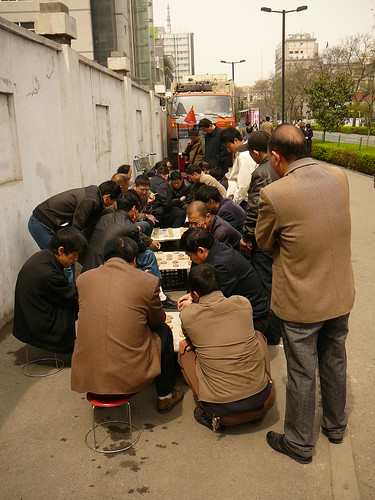
Life, no matter where it is lived, resolves itself into routine or, otherwise, never really becomes “life.” Three months in, the contours of my routine have become fairly clear. The life of an ex-pat in Xi’an revolves around a few bars and clubs, perhaps language classes, a girlfriend or boyfriend if you have one, work and shambling about. It’s almost painfully normal. The appeal then, is not the day-to-day minutiae, but rather the thrum compressed human energy that surrounds it.
As my life has no ready-made narratives these past few months, please accept the following short takes:
Outdoor Life
I grew up in a place where, if you asked someone what she did in her free time, she’d probably say walk on the beach, see the sun set, or work in the garden. In contrast to that, the routines of city life could not but be more glaringly different. Yet, even with such caveats, free time in China can sound rather depressing. Ask a man how he fills his time and he will say videogames, movies, and nights out with his friends. As a woman and she will say shopping and hanging out with friends.
Again and again Chinese tell me that their country is restrictive, not politically (they don’t care much), but socially. They speak of the pressure from family and friends to conform. Chinese daily life—at least in the cities—is based on family, friends, and work. Often these are one and the same. Chinese people seldom seem to be alone in their free time. If a Chinese person is alone, he is often running an errand or waiting to meet someone. Few activities seem to occur outside these bounds. It’s easy to see how this weight can bear down on them—there is little respite from friends and family—from people who know you and have expectations of you. The escape to videogames seems a very logical result.
Yet the fact remains that Chinese do hang out together and, unlike in the states where activity is largely confined indoors, life in China is conducted outside. There are food stalls and clothing stalls everywhere. Numerous shops lack doors and simply open on to the street. To be out is to be surrounded by activity. I can only imagine the shock new arrivals to American cities must feel when confronted by the relative lifelessness.
The Neighborhood
My apartment block is located down a back street, only a block and half from the city center and yet, despite the small distance, you’d never know.
Our house has a gate-keeper, a shiny bald, wrinkled old man who lives in the tiny gate-room with his wife. His day often consists of watching television and separating out the apartment’s trash into to two burlap sacks. Often a girl—a granddaughter perhaps—hangs out with them.
Directly outside the gate is some sort of scrap metal collection site. During the day, men go at large pieces of aluminum or motor-part-looking contraptions with hammers, breaking them down into component parts. They operate out of a little garage and, at night, a big truck is parked in front and loaded fifteen feet high with scrap metal.
On either side of the garage are hair saloons and more further along the alley. Whereas many back alley salons are merely brothels, these are the real deal and are constantly in operation—as in Istanbul, barber shops and salons stay open until ten o’clock or later. In one direction along the alley way are more apartment blocks. In the other, in addition to the salons, are a number of little restaurants, unmarked and outwardly caked in dirt, but overflowing with customers during the lunch hour.
At all times of day, the street is busy. Children run to and fro, small dogs—the occasional collie is the only large dog I’ve yet seen—patter about in little knitted vests and men fix bikes and motorized rickshaws or play badminton with their wives.
In the morning the main road is full of vegetable vendors. Small hot peppers, bok choy, various other leafy greens, bean spouts and tomatoes are common—as are the dark-orange verging-on-red carrots that are ubiquitous in China. During the market times, the street is a chaos of vendors, buyers, bicyclists, motorcyclists, rickshaws, car drivers honkingly oblivious to the narrowed streets, and random passersby.
Head the other direction, past those other apartment blocks, and you emerge on a main street lined with shops. Here are the majority of restaurants I go to as well as a dog-groomer, a sign-carving company, more salons, the entrance to a parking garage, several repair shops and multiple videogame parlors.
In the daytime, this street and, frankly, every other in the area, is rather depressingly scruffy. But this all changes at night. In the dark, the dirt becomes invisible and what stands out are the neon lights and the activity. Most nights, I get noodles on the street and sit watching the passersby, listening to shouts from nearby mahjong tables, and lose try to let the moment last forever.
Practicalities
Then there is the issue of bathrooms. Bathrooms in China are almost all squats. The only exceptions are places which cater to western tourists. Stalls do no have toilet paper or—unlike Turkey—a bucket and tap. Stalls usually have doors, but seldom have locks. Moreover, they aren’t cleaned regularly, the surrounding floors are covered in uriny-water—the floors outside are too. Often the foot flushing mechanism breaks or goes unutilized for multiple uses; the result is a large pile of shit waiting to greet you upon entering the stall.
If any of this sounds disconcerting—and I’d imagine it does—I’d say you’re thinking about it wrong. This is simply the way it is. If any of the foregoing details sound disgusting, consider that (contrasted with the US) China at least has public bathrooms all over the place. Very seldom do you have to pay for them. The only expense that falls on you is the cost of a pack of Kleenex.
And bathrooms are representative of a more general fact about China: It is what it is and complaining get you nowhere. Time and again people whinge about the following problems:
- Spitting. People spit everywhere. On the street, in the midst of vegetable markets, on buses, upon emerging from bathroom stalls, in restaurants and on the carpet of Starbuckses. Likewise, men are constantly pushing closed one nostril and rocketing out jets of snot from the other. These hygiene issues extend to person grooming including nail clipping in the middle of restaurants, cafes, offices and teachers’ rooms. When you consider that a good part of The Stranger’s “Last Days” column is given over to gripes about such things, you realize how uptight Seattle truly is . . .
- Driving. Chinese are amazing drivers—though few agree with my assessment. They weave in and out of traffic, pass pedestrians and bicyclists with only inches to spare and drive on sidewalks if necessary. Someone one in America attempting such stunts would be dead within days, yet most Chinese are verifiably not dead. Pedestrians don’t help matters by walking out into traffic given the slightest opening. Unlike the US where we let lights do our thinking for us, the simple act of crossing the street in Chinese forces us to be fully aware of the surroundings.
- Slow Service. In Turkey, I rather enjoyed the slow pace of service I received because it often seemed as though the staff were enjoying itself. At government offices, the officials would drinking tea, chat and, intermittently, attend to your paperwork. The might, if the mood struck them, start up a conversation with you. Chinese office slowness seems less lighthearted, but it is equally lugubrious. (And this is strange because it seems to aggravate Chinese as well. Whenever I find myself in a line with a Chinese, he or she constantly pouts and harrumphs about the pace of the clerk.)
- Haggling. The price in China—in much of the world for that matter—is not the price. I vividly remember, back in Seattle, going over the cost of products I ordered for cafes and restaurants and wincing at how small our profit margin was, but in the US the idea is price competition. The price is the price and if people don’t like it, they will go elsewhere. In China, price is merely a starting point and every major purchase becomes a game of chicken. My suspicion is that, this business model helps explain why developing countries can have twenty of the exact same store lining a street. Once the choice of store becomes a matter of best deal and other considerations (such as family connections), it becomes more convenient for all the stores to group together. Were thirty plumbing supply stores spread throughout the city, people would just go to the closest one and settle for its prices. If all the plumbing stores are beside one another, the customer can make his way up and down the row, negotiating the best deal.
I don’t want to imply that I never complain about these things. Rather, I mean to say that the complaints are pointless and, if these sort of things are insurmountable difficulties, China is not the place for you. One has to ask himself what truly matters, what he can live with and without.
Entertainment
Xi’an has a good number of bars and clubs. Most teachers frequent one called the Park Qin in the basement of a hostel. The place is darkly lit—some might say cave-like. Next door is another, slightly seedier, hostel-cum-bar called the Shuyuanmen. Finally, right beside the central Bell Tower, is yet another dingy-but-popular hostel/bar. This last one gets the budget travelers and, less explicably, all of the city’s teenage lesbian population. A good night there involves an hour of pool, cheap drinks and a constant stream of girls dressed like K.D Lang passing by.
While Park Qin gouges you with its high-priced, watered down drinks, the rip off is at least muted amid the grotto-dark colors. Along neighboring Bar Street, the tourist squeeze is more blatant. And, of course, all this is relative. A beer ranges in price from ($1.50 to $4.50 at the most expensive place). A cocktail is typically ($2-$5). No worse than a dive bar in the states—except that teachers only pull in about $200 a week.
You feel the pinch more at the clubs. There are several and they are decidedly mixed affairs. Take 1 + 1, for example. The place has at least three sections; a crowed dance floor surrounded by tables and recessed rooms full of couches where you can be waited on in style. Down on the dance floor, a press of men dance, dry ice is pumped out in clouds, more exhibitionist sorts dance up on elevated blocks, and pity be to any girl who enters the dance floor not expecting to be pressed up on immediately by a half dozen Chinese guys. Especially on this floor, you see groups of men, tables covered with beer bottles and, scattered here and there, drunken People Liberation Army (PLA) officers.
More sane is the upper dance floor which, for whatever reason, is calmer. The dance floor is smaller and girls are able to dance as they please without fear of groping. This is where the foreigners seem to congregate—Saudis, Pakistanis, Kazakhs, Uzbeks, Dutch on vacation, students from assorted African countries.
(And if neither of these are not your cup of tea either, there’s a lounge area where you can sit and revel privately in your wealth. Again, I suspect this is for the truly well-heeled, those still suffering from a degree of status anxiety would be out on sight, displaying their money.)
Now, all of these places have a dark side—anywhere in the business of getting people drunk does. The Bell Tower hostel will have bottle-breaking fights between furious lesbian lovers and I have witnessed two occasions of a Chinese guy feigning to choke his girl friend at 1 + 1. Outside these places one can expect to see angry arguments, many of which are uncomfortable to watch as an American. China is one of those countries where women (not all, but these is great truth to the following generalization) expect their boyfriends to show an aggressive, frightening level of jealously and where, to do otherwise, would be considered a sign of gross indifference. The result is these mutual, public screaming fits.
And yet, for all this violence and seediness, all these places in combination have a narcotic effect. To move from one beat-pulsated bar to another is to feel as if the everyday world has been stripped away to reveal something more subterranean and magical. To know, sitting around on a given night, that people are out somewhere dancing and living it up, that there is this well of vital energy out there which you can step into if the urge strikes, is a powerful knowledge indeed.
This is the danger of travel in miniature: Knowing there is so much more out there than you can take in with your senses at one time; knowing that so much is happening at once, and knowing that you must choose between it all.
How does one keep himself down on the farm after he’s seen Xi’an?
Saturday, April 3, 2010
BOO!

A new book is challenging Inishowen readers to be the surprise they want to see in the world.
Penned by local resident, Tony Kearney, ‘BOO!’ confronts perceptions about who and what we think we are and what we can become.
Kiwi Kearney left New Zealand almost thirty years ago to practice law in London before moving to Malin for a better quality of life in 2006.
A fascinating, thought provoking, witty, accessible and above all practical guide, ‘BOO!’, approaches its subject matter with a great deal of common sense and down-to-earth practical advice.
The book, like its quirky author, is not easily categorised. A former lawyer with ‘sporty genetics’ – Kearney has run the London Marathon, completed a triathlon in New Zealand and climbed Kilamanjaro.
“We label ourselves, we limit ourselves. The book is about freedom and that is something that you give to yourself. ‘BOO!’ explores how you can change your reality. Life is full of surprises why don’t you become one?” he said.
“The potential inside each human being is massive. Beware of the PR of who and what you think you are. The book is for anyone who wants more out of life.”
53-year-old Kearney, who loves the outdoors and attends Carn Gym regularly, said that people have become obsessed with quantities.
“Individuals get caught up with how much money they have or how big their house is but that stuff is just temporary. BOO! focuses on qualities that don’t run out. It asks, ‘What really makes us happy?’” he added.
The Malin author, who doesn’t take himself too seriously, uses a degree of humour and innovative thinking to explore themes from developing natural confidence to power of the mind; from how to think to the workings of the brain; from genius to illumination; from making a difference to letting go of control.
‘BOO!’ covers a kaleidoscope of subjects in a sweeping yet inspiring way that will leave the reader refreshed and renewed in facing the many challenges that life offers.
Careful however. After reading the book you could discover that you, yes you, are the very surprise that you want to see in the world!
Kearney’s positive nature is infectious and the smiling author is almost living proof that his book may be on to something.
“I believe that people can achieve incredible things and I hope I’m a person with a vision of what kind of future we can all have. I’m a ‘glass half-full’ type of guy,” he said.
‘BOO!’ will be launched in Café Donagh, Carn on Saturday, April 17 at 2pm. The author will give a brief talk before signing copies of the book.
To buy ‘BOO!’ online go HERE or call Tony on 087 2553414.
Subscribe to:
Comments (Atom)


