The reviews are in!
http://answers.yahoo.com/question/index?qid=20091205115943AAbNKmR
"I can't help but think of weed when I hear zeefer."
"Zeefer is a bit strange!"
"I'm not sure about Zeefer. I don't know, I like unique names, but Zeefer is a little too unique. It reminds me of a transformer!"
"Zeefer is awful."
"Zeefer--absolutely not."
"Zeefer.... well I'm just unfamiliar with it."
"Zeefer sounds like reefer so no"
"Zeefer is horrible! That poor child!!"
Wednesday, March 31, 2010

Sunday, March 28, 2010
Carndonagh Easter Parade

Press release
Easter Parade Returns to Carn
After too many years of absence the Carndonagh Easter Parade returns to the forefront this year on Easter Monday. Starting from Simpson’s Car Park at 3pm (sharp), the parade will proceed to the Diamond, down Bridge Street, onto Church Road and will then return to the Diamond via Station Road and Malin Street, before ending at Simpson’s.
The organisers, Carndonagh Easter Monday Parade Committee, have been very much encouraged by the support, financial and otherwise, that they have received from the local business community. It is hoped that the many clubs and organisations in the town will join the parade on the day and make it a celebration of the extent of community involvement in Carn. All businesses are asked to join in the spirit of the day, enter floats and promote the town. Entries however are not confined to the town so, if you fancy a good day’s fun, come along and enter.
There will be a competition for the Best Easer Bonnet with; if possible, accompanying Fred Astaire and for the best entries and floats in terms of fancy dress and endeavour. So get the artistic side going and be creative. (If you don’t know who Fred Astaire is then Google it or get the DVD / video of the film “Easter Parade”.)
Inishowen Vintage Cars and Tractors will be taking part and entries are invited from far and wide.
Along with the Buncrana Accordion Band, the Inishowen Carnival Group will also be in attendance and there will be live entertainment from the reviewing platform in the Diamond.
Visitors to the town and participants are asked to comply with traffic and parking restrictions and abide by direction from the Gardai and parade stewards. There will be ample designated parking available around the town and on the outskirts. Detours will be in place for through traffic.
The organisers are asking for more volunteers to assist with stewarding and would ask anyone interested to please contact Aidan Wilson at Carndonagh Rural and Community Development Offices- Tel. (074) 93 29969. Or Tommy Cunningham – (086) 35 66 333.
Finally, it is hoped that this will be a great revival for the Easter Parade and a few prayers for good weather on the day would not go astray !!!.
For further information contact Mary McCallion (087) 2905922
Saturday, March 27, 2010
WISDOM OF THE WORLD - WEEK 100
 Councilor Michelle Bradley and Martin Malone outside of the old fort at Neds point. The area is going to undergo regeneration with a plan to introduce a bird sanctuary and cafe.
The Water Beetle
Once, in a little pond, in the muddy water under the lily pads, there lived a little water beetle in a community of water beetles. They lived a simple and comfortable life in the pond with few disturbances and interruptions.
Once in a while, sadness would come to the community when one of their fellow beetles would climb the stem of a lily pad and would never be seen again. They knew when this happened; their friend was dead, gone forever.
Then, one day, one little water beetle felt an irresistible urge to climb up that stem. However, he was determined that he would not leave forever. He would come back and tell his friends what he had found at the top.
When he reached the top and climbed out of the water onto the surface of the lily pad, he was so tired, and the sun felt so warm, that he decided he must take a nap. As he slept, his body changed and when he woke up, he had turned into a beautiful blue-tailed dragonfly with broad wings and a slender body designed for flying.
So, fly he did! And, as he soared he saw the beauty of a whole new world and a far superior way of life to what he had never known existed.
Then he remembered his beetle friends and how they were thinking by now he was dead. He wanted to go back to tell them, and explain to them that he was now more alive than he had ever been before. His life had been fulfilled rather than ended.
But, his new body would not go down into the water. He could not get back to tell his friends the good news. Then he understood that their time would come, when they, too, would know what he now knew.
So, he raised his wings and flew off into his joyous new life!
Thursday, March 25, 2010
FIRE


Photo's of the remains of a fire that came within ten metres of the house this week. Inishowen News covers the story
My account of the day
EDUCATION AND TRAINING FAIR INISHOWEN


Attending the Options Inishowen day at the Gateway Hotel on March 24th were:
Inishowen Jobs Club
DSFA
Donegal County Childerns Commission
National Learning Network
Tuath
Tyrone-Donegal Partnership
FAS
EURES
Community Workers Co-op
Clonmany Y+C Centre
Teagesc
CAFRE
VEC Adult Education
BIM Fisheries College
Playhouse
Kieren McShane Training
Inishowen Community Radio
Swilly Drive
Street Driving School
Inishowen Development Partnership
Carn Community School
North West Regional College
University of Ulster
LYIT
HSE-WNO
Moville FRC
Scoil Mhuire
Donegal County Council
The Nerve Centre
Crana College
Gardai
Second Chance Education
Sunday, March 21, 2010
Doggy Birthday Parties


 I just made these crazy bulldog cupcakes and sheep dog cake. It got me curious about dog birthday parties... !
Friday, March 19, 2010
Bacon substitutes
I found myself craving a BLT, but I've never cooked bacon and I wasn't sure we had any. But I did find a can of bacon-flavored SPAM. The result was this:


I'm sure it would have tasted just as good with regular SPAM, but I wanted the vague bacon flavor to remind me of what I wasn't actually eating.
It's worth noting that the SPAM is much more consistent to lay on the bread, as actual bacon requires time-consuming, careful placement for a comfortable-to-wield sammich. And this was one comfortable-to-wield sammich.
Monday, March 15, 2010
"Lots of Good Stuff" Giant Shell Pasta
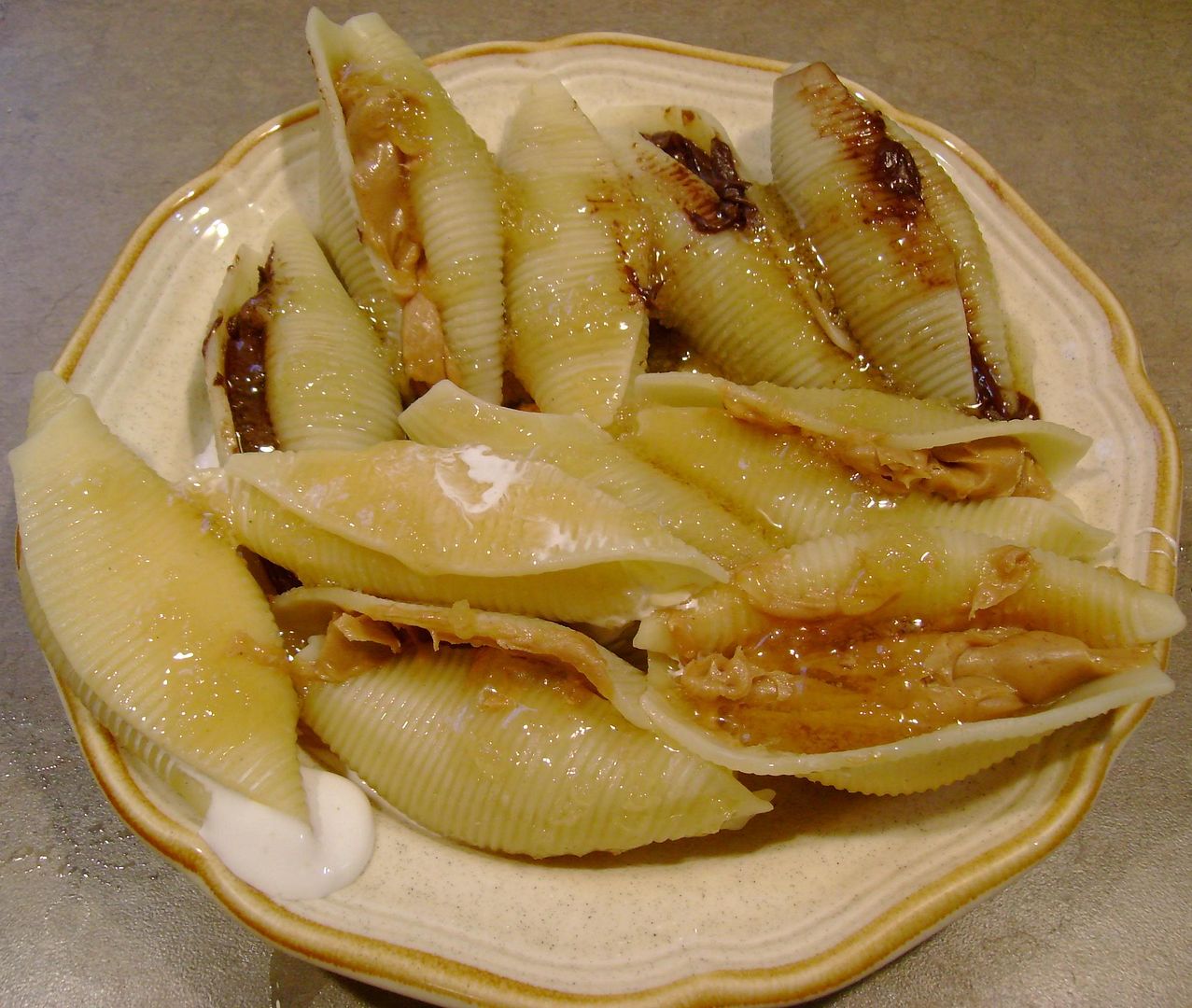
After finding out about giant pasta, I decided to build upon my previous nutella and pasta food experiment. This time, it's giant shells, and instead of just nutella, I filled some with peanut butter, and a few with marshmallow creme. Then I poured honey all over the top. If it looks like there's not all that much nutella in some of them, that's because it's a tip of the iceberg kind of deal.
Honestly I think this is kind of too intense, and I would not eat this for dinner every day of the week. Maybe only on special occasions or when I'm not thinking clearly.
I rate this food item one out of two.
Sunday, March 14, 2010
WISDOM OF THE WORLD - WEEK 99

Three Visitors
Three visitors called to the home of a poor family. They were all invited inside but one of the visitors spoke. “Only one of us can come in. I am Love and with me are Success and Wealth. Go and check with the family which of us you would like in the house. The mother, father and daughter sat down to talk about it. The mother said, “I think we should invite Success in, you can get the promotion you are after and our dear daughter will get accepted into the best college.” The husband disagreed, “I only want the promotion for the extra money. Let us invite Wealth into our home, then we will not be concerned about promotions and colleges, we will already be prosperous.”
The daughter looked up at her parents and spoke softly. “Mum and dad, I appreciate that you want us to be wealthy and successful, but in the long run I feel it would be better to have Love.” Her parents smiled at her wisdom and went out to invite Love into their home.
To their surprise Success and Wealth followed Love inside. The mother said, “I thought only one of you could come in?”
Love explained, “If you had chosen Wealth or Success, they would have entered alone, however where Love goes, Success and Wealth always follow.”
Thursday, March 11, 2010
FREE prize draw

MAGIC SEEDER
This week I have been using the Magic Seeder seed sowing tool which is based on the principles of automatic seed dispensing machines that large growers use, but this fits snugly into one hand and only cost €6.90.
The Magic Seeder can be used to sow seeds of all shapes and sizes up to 2mm. One problem when sowing seeds is getting compost and water onto our fingers, which makes the smaller seed sticky and hard to spread out properly. The Magic Seeder keeps the seed dry and accurately spreads the seeds out in trays, pots or plugs.
It took a bit of time for me to get used to the device as I have to figure out how hard or gently to press down my thumb on the syringe like plunger that frees the seed from the chamber. Once I had mastered this I tested the device on seed as small as lobelia to the size of lettuce seed, laying them out neatly in straight, even lines. Another benefit from using the Seeder is that it can reduce seed wastage and cut down the chance of disease through sowing too thickly. The Magic Seeder also is used by the Royal Horticultural Society with great success. See them in action on the magicseeder site.
To win one of two Magic Seeders I have to give away, just go to gardening.ie and leave your e-mail address, mentioning the name Magic Seeder. Good luck
Closing date March 31st 10
Transition Event

PRESS RELEASE
PR Contact: Kathleen O’Hara Farren for Transition Inishowen Initiative
Tel 086 1211898 and 074 9381000
How can you save money and discover new ways of working with your
local community? To find out more, all are welcome to “Transition
Inishowen's Day of Events”, Saturday March 27th. The two free events
are organised by the voluntary group Transition Inishowen Initiative.
In the morning there is a talk and slide show with practical examples
of DIY solar thermal (domestic water heating). Then after a light
lunch there is a film screening of “In Transition 1.0”, in which you
meet inspiring individuals and groups from around the world who are
learning ways to live more sustainably, whilst saving money and having
a good time.
Transition Inishowen is a member of the national group Transition
Towns Network of Ireland and Northern Ireland which is a group helping
people help themselves to adjust to a future with less fossil fuel and
increasing effects of climate change. “In the face of fluctuating oil
prices and the fact that global oil supplies are due to peak and then
decline in the near future and also with the ever more obvious effects
of a changing climate, every community needs to adapt to become more
resilient and better prepared.” said group member, Claire Gilmour.
Since February 2009, Transition Inishowen have been raising awareness
of Peak Oil and Climate Change by having film screenings, slide shows,
skills workshops and giving one-on-one support to help strengthen
individuals and building resilience in the community, resilience being
the ability to withstand shocks and crises.
All are welcome to one or both events which take place in the IDP
(Inishowen Development Partnership) offices on Pound Street Carndonagh
(opposite ICRFM) The Solar workshop is at 11am. Light lunch is at 1pm
and the film “In Transition 1.0” is on at 2pm. Admission is free.
If you have ever thought about installing solar panels but felt
daunted about finding the most suitable system for your house, and by
the cost and the installation process, then come to the Solar Workshop
presented by Cye Bannon. Cye has recently installed a solar evacuated
tube setup at his own house in Belfast, and has trained in the other
main solar thermal technologies. He is keen to share his knowledge and
experience. In this workshop he will be explaining his idea for a
solar co-operative aimed at supporting DIY installation of solar
thermal (domestic water heating). He will have a slide show and some
examples on display. Self relience and thriftiness are central to
this workshop.
The film “In Transition 1.0” features professional and amateur footage
of communities around the globe who have taken steps to “walk the
talk” of living more sustainably. You can see how much optimism and
empowerment is gained by doing this. Many issues are covered such as
renewable energy, public transport, green businesses, local food
production including growing your own, and learning or relearning
basic skills such as baking your own bread and mending your own bike.
A slower more meaningful lifestyle is embraced, community spirit is
fostered, and also an awareness that you are living more in harmony
with the environment.
The group would also like to draw your attention to the fact that
March 27th is Earth Hour day, established by WWF (Worldwide Fund for
Nature). We are all urged to switch off all lights (if not all
electricity) for 1 hour at 8.30pm. Last year hundreds of millions of
people around the world took part.
Transition Inishowen anticipates a big turn out for these events on
this special day! Contact email: transitioninishowen@gmail.com.
UPDATE PRESS RELEASE
April 1, 2010
From Kathleen O'Hara Farren tel 086 1211898 and 074 9381000 for
Transition Inishowen
PR and photo attached with pr text below also.
RE; Transition Inishowen Initiative two firsts on one day – solar
power workshop and film screening.
Transition Inishowen Initiative held a successful Day of Events on
Saturday March 27th with a full house of people from across Inishowen
attending the peninsula's first DIY Solar water heating workshop in
the morning. The afternoon audience enjoyed Inishowen's first public
screening of the film “In Transition 1.0” which gave a clear
explanation of “Peak Oil” and presented people who are embracing 'the
transition' – learning about alternatives to fossil fuel use in many
areas including energy, food production and transport.
In the film, which can be seen for free on-line, town councils to
sewing groups are seen learning and sharing skills – all with the aim
of making a positive change to their oil dependent lives. We saw that
Transition Towns is a world wide movement and it's methods are
explained well by the TV News report from the States. Workshop
facilitator, Cye Bannon said, “The afternoon film was great & further
reinforced the importance of community initiatives such as Transition
Inishowen in promoting self-reliance & small-scale renewable energy
generation.” Afterwards the group discussed one of the issues brought
up by the screening – local currency – citing the Buncrana Christmas
voucher scheme as an example of local currency in action here.
The good turnout for the Solar Workshop shows the interest and need
for this kind of knowledge in Inishowen. It will be followed up by a
second, more practical lesson in installing solar panels for heating
water. Cye Bannon, from Belfast who presented the workshop said, “I
was greatly encouraged by the well-informed Inishowen audience and by
the keen interest they expressed, and look forward to seeing them
again at the next Transition Inishowen workshop (date TBC) , at which
we can discuss & agree ways of working together to support DIY
installation of inexpensive solar water heating.” He explained the
value and methods of a working co-op to install these panels to ensure
they are easily wide spread throughout the community. His approach
was non-commercial and DIY.
Transition Inishowen would like to thank the Inishowen Development
Partnership for providing the room, the local media, libraries and the
many who are showing an interest in making the transition. A national
group welcome online participation –
www.transitiontownsireland.ning.com Transition is for everybody. The
idea is to become a more resilient community by, over time, learning
many useful skills together and adapting to new forms of transport,
energy and every aspect of society. It is a positive response to
these changing times.
Sunday, March 7, 2010
“My American Friend"

There was a noodle shop I particularly liked, nestled along a dusty side street connecting the city’s central shopping area to a cluster of art supply shops around the South Gate. It was your typical Muslim noodle place—six tables inside, a barbeque outside, a table near the door for kneading dough, and a little kitchen separated by glass. On the walls were a few posters in Arabic script and a large picture menu advertising the various noodle dishes available—and, more often, not available. The food was good enough, but I’d made it a return destination on the thinking that an expat has to have a few places that are his haunts.
One particular day when it was pouring down snow and the roadways were covered in a dirty, depressing mush, I decided to stop in. The thought of a belly full of noodles, green beans and tomato sauce seemed ideal in those conditions. As I entered in, pushing back the flaps of heavy plastic that hung over the doorway, I was greeted by clapping and someone shouting “Hello, welcome, welcome” in a very Chinese accent.
The welcoming committee was one man. He looked middle aged. Not yet gray, he had a wispy mustache and scattering of chin hairs.
“Yes, welcome, ‘huanying,’” I said back to him without his really acknowledging it. He repeated his sentence a few more times as I sat down at an opposite table. This type of thing was pretty typical and I marked him for another in a series.
“Where are you from?”
“Seattle.”
“Ah yes, I know!”
“Yeah?” I was incredulous.
“Yes! Oregon . . .no! Washington, Oregon, California. Yes . . .what do you do here?”
“I’m a teacher. At Aston School. You know?”
“”Yes, I know several Aston teachers.”
“And what is your job?”
“I am . . .it is hard to explain. I work at school. If there is electrical problem or building problem, I fix it. I clean things . . .”
“Mmm . . .okay. Custodian, maybe. And where do you learn English?”
“Ah, from helpful foreigners.”
Not wanting to not be a “helpful foreigner” I continued the conversation. His name was Lee and he was coming from the art supply street. In the chair next to him he had placed a bag of calligraphy brushes. He came to this restaurant regularly because the staff was from the same Qinghai province city as his ex-girlfriend. (Maybe I’m the asshole for thinking this should be a strike against the place in his book, but to him it was the source of connection.)
He was forty one and lived with his elder sister while his own, newly bought apartment was undergoing construction. He was from Xi’an, but his father had been in the army and they’d moved around a bit. At one point his father had been stationed in the Northeast to oversee factory production. Matter-of-factly he explained that, “during the Cultural Revolution, there were many problems between managers and workers.” In thanks for his service, his father and other officers had been personally feted by Chairman Mao. After retiring, his father had moved to Xi’an and the family now worked for a military equipment factory in the east of the city. His sister lived in factory housing.
Since I didn’t enjoy shouting to talk, I moved to his table and, while we waited for our food, he showed me two calligraphy books he had just purchased. Both were by scholars from the ninth and tenth century—there was something of a Socrates-Plato relationship between the two apparently.
Chinese calligraphy is one of those arts for which the taste must be acquired. The whole idea is to express emotional states through the way one writes—not so different from italicizing or boldfacing font, but certainly more visually pleasing. Since calligraphy examples are usually poems and not just random words the style and content can create interesting juxtapositions (or so I imagine, actually asking this question, albeit more simply, gets me blank stares). Over two thousand years different schools have come and gone. Often a new school will rise up emulating the style of some previous great—it all very insular. (The most interesting sort I ever saw was a type called seal script which predates current Chinese character system and looked far more ancient and pictorial—it’s the sort of thing you imagine seeing on cave walls. During the Qing dynasty, scholars seeking to resurrect ancient forms, began practicing it again.)
“Calligraphy is very relaxing,” he explained as he leafed through the books, “I often do it after work or at school. All my art supplies are there now and the school is closed for Spring Festival. Therefore I buy new brushes.”
I nodded.
“I have many foreign friends. A teacher, he is from Korea, he likes tea, so we always drink tea. White Peony. You know?” I shook my head, mulling my response to the inevitable question. “Near my sister’s house in East of Xi’an there is big tea market. You want to go with me?”
I said yes and the food came. He got up and said something to them which I guessed to be paying for mine—this happened enough to me that I’d developed a sixth sense about it. We ate and left together. As we walked, though, I modified things and asked if tomorrow was okay. Once we’d agreed upon a time, we parted ways.
The following day the city was hit by even more intense snows. The bus out to the eastern neighborhoods was slow going and humid with collective body heat. We’d agreed to meet in front of one of my school’s branches, a newly constructed building whose bottom floor was still just bare walls and a small trash-covered table with a space heater plunked down on top of it. A cleaning lady and doorman sat here while I waited at the drafty glass entrance doors. After a short wait and a text message, I learned that he had not yet left his house. Forty cold minutes later he arrived.
He was very apologetic, but it was clear that he had not expected me to follow through on the meeting—really, the way we’d parted could easily have been construed as giving him the brush off, so I didn’t grudge him the skepticism of a warm home.
He had his heart set on a certain restaurant that wasn’t particularly close. After initial failed attempts to flag down a taxi followed by some trudging to and fro in the snow, we finally succeeded and were whisked off a kilometer away. In the taxi Lee seemed extra animated. I can barely speak a word of Chinese, but I can pick out a lot of words and the gist of the conversation was the driver asking about me and Lee giving him the low down. He was taking on the role of my publicity agent.
The restaurant Lee picked was on a busy street across from a large, wholesale vegetable market. The place was packed with groups small and large. Customers entered bearing large shopping bags full of New Years gifts. Unlike many overstaffed Chinese restaurants, this place had only three harried girls and an older woman working the crowds.
We took a seat by the window and Lee headed off to order our food. He was set on having us order the yangrou paomo, a soup that consists of chopped up bread and a few pieces of mutton or beef. This is, apparently, the equivalent of eating lobster in Maine. Multiple Chinese who’d taken me out to eat had insisted that we order this meal because it was the traditional food. And, sure enough, it was very satisfying—if not particularly flavorful. Usually it came pre-done, but at this restaurant we were each provided with a bowl and two hard pieces of pita bread.
“Tear it into small pieces,” Lee instructed.
I set to work half-assedly until he exclaimed, “No smaller. If you tear big pieces, the cooks will think you are a farmer. From a village. The cooks will not give you a good cut of meat.”
Tearing properly took nearly ten minutes—a process Lee called “very Buddhist”—and finally, my bread acceptably torn, our plates were whisked off to the kitchen. While we waited, Lee grew ever more agitated, looking around, standing up, calling over to waitresses, exiting the building to hock a ball of snot.
When he returned he remained standing, calling out to the waitresses before sitting down and telling me, confidentially, “The waitresses are very pretty here”—he indicated a particular girl to make his point. She struck me as very plain and very young. He called her over and introduced me. Then he called over another young girl who he introduced as the owner’s daughter.
“Hi,” I said, not really sure what role I was meant to play in all of this.
“She was a pupil at our school,” Lee explained.
“Good,” I added.
The girl fidgeted for a second before rubbing her tummy and saying something in Chinese.
“She’s hungry,” Lee translated, smiling and freeing our little captive to return to her own activities.
Our food came. To our bread crumbles had been added hot broth, chunks of meat and some transparent rice noodles. Accompanying the food were little side dishes with chili paste and sweet pickled garlic. Lee had received the wrong bowl, but accepted it and started eating. I was less sanguine about the idea of eating bread some other customers hands had ripped and double checked that mine was no mix up.
Food eaten, we headed out—but not before I was introduced again to the plain young waitress or before we loitered around the outside for Lee to catch her eye and wave again. Our path led up, past the wholesale market and a couple other peripheral dry goods markets, then down some side streets until we came to a large new building. This entire property was devoted to tea merchants. Shop after prettily furnished shop contained boxes and boxes of tea. Considering that this was the height of shopping season, the place was morbidly empty.
“This building is new. Where were all these people before,” I queried.
“A different market. Now they are here, but business is bad.”
This was an understatement. Each store was manned by a solitary worker engrossed in her laptop or starring vacantly. As I’d often seen in China, the scale and presentation of the business was not equal to the actual demand. We stopped in one place where Lee introduced me and bought a few bags of tea. I asked what made this place special, but he gave no answer. We headed to the second floor and popped our heads into another shop, this one drearier than the first. It was manned by a young girl from Fujian province—all the tea shop folks seemed to be from there. After introducing me, Lee sat us down for free samples.
Once we’d left this building, we made our way along several more side streets. Here and there Lee would call out to people and point at a child who, he’d explain, had gone to his school. He seemed to know a large number of people, but, equally often, he seemed to be shouting at complete strangers or making conversation with people whose humoring of him was mere politesse.
One dingy street brought us to an even dingier wholesale market set up in a space which in most other countries would be reserved for a parking garage. Many of the shops sold bulk tea, but other sections we passed sold electronic razors, shampoos, bike wheels, portable water heaters and the like. Passing up stairway, arriving on the second floor, we came upon a tea market far larger than the previous—albeit less spic and span. Like its newer cousin, it was equally empty of customers.
Instead of customers, the place was full of visitors. Instead of a solitary clerks most places had between two and ten people sitting around, playing cards, smoking or chatting. Even the most lonesome merchants had a child running around in front of their shops. Besides tea, this place stocked large quantities of supplies—varnished sandalwood tables, animal ornaments to decorate those tables and small drainage trays for pouring off excess tea.
Commenting on how beautiful one store’s offerings were led to Lee dragging me into the place and introducing me to the owners. I was very hesitant to stick around because I didn’t want them to get their hopes up—I was not keen on buying anything they had on offer. My entrance caused a stir, however, with the owner, his wife (baby in arm) and a few hangers on standing up and coming to greet me as Lee made introductory remarks. They offered me to sit and have tea, but I begged them off. They showed me various sandalwood tables and beds and cupboards. Out of one cupboard the owner pulled a series of large scrolls decorated in red and black in ink stamps. The stamps were all in seal script and the man had carved each himself.
From there we passed several more stores. Lee, seeing a bald man he knew, shouted something and then, in English, for my benefit, shouted, “Hey egghead!” and, to me, “he is an engineer at my elder sister’s factory.” Again I was introduced.
Now we came to a tiny little place more on the scale and design of an office coffee break room. There were few teas on display and a large refrigerator which took up much of the floor space had but one bag of tea inside. At the tea table was a middle aged man and, overseeing the joint, was a rather attractive woman in her early thirties who looked a bit like Michelle Yeoh. We took seat and I was yet again introduced by Lee who now aunched into an extended spiel about something or other while the man and woman smiled and nodded. I was utterly left out of the picture. Occasionally Lee would turn to me and explain that he had just complemented the woman on her looks or he might ask me whether I liked the tea before telling me that there was nothing more pleasurable than having tea in the company of a lovely lady.
After a bit, the man and woman began asking me questions—or looking directly at me when addressing the question, then waiting for Lee. These questions would be on the order of “why did you come to China?” “Do people drink tea in America” or, more cryptically, “How is the situation of young people in America?” (The woman had, apparently, been an elementary school teacher before. Finding herself out of work, she’d opened a tea shop.) I tried to give short simple answers to these questions and each time Lee would take several minutes to relay the answer. Often he would tell me that he had added a compliment to my answer. When I tried to ask a question there was this same unevenness of translation. A question I asked about how long she had worked at this place or in what capacity the man served here would take a minute to be asked and the answer would always be abridged when returned to me.
Finally I became silent and merely watched the proceedings. The entire time I we had been here, the suspicion—always present—had steadily firmed itself in my mind that Lee was showing me off to people. We were making a tour of his usual haunts (or places he wished were his usually haunts) and I was being displayed like a trophy. Whenever he spoke of me in Chinese I was his “American friend” and everyone he spoke to asked of me with the same formulation. I was a Jaguar, a Savile Row suit, a Jacob watch; a status symbol. I didn’t exactly begrudge him this victory lap. He’d treated me well, bought me two meals and a taxi ride, but I rankled at playing the role of trained bear.
By the time we said our goodbyes, my stomach was full of tea. But we weren’t done yet. There was another attractive tea hostess to visit and then another guy to sit with and sip black tea. This last shop in particular sapped my endurance. I was already full and didn’t really care for acrid black tea, but Lee was undiminished in his ebullience and continued to hold forth on the merits of various teas. The two men chatted about tea while I sat peripheral, stony faced. It was all an odd position to be in. Here I was, Lee’s key to a bit of respect and yet, really, a pointless appendage. To prod him to hurry would be rude and yet it was from me that he was gaining reflected stature in the first place. Like I said, it grated.
The final place we entered, a spacious tea supply store full of beautiful tea sets, must have been a let down for Lee. He ambled around greeting people and making introductions, until he came to the boy who seemed to have the run of the store. Gesturing to me, he said in Chinese, “My American friend is a teacher. At Aston School.”
The boy, unimpressed by my pedigree, shrugged and said he didn’t know Aston.
Lee then gave some words of explanation, but I suppose the damage had been done. The boy had seen through me. What was I, but another foreigner? My presence gained Lee nothing in his eyes. We didn’t buy anything there.
After this store, I was finally able to get us moving out of the tea market. On are way back to the bus station—punctuated by numerous encounters with students and allegedly-former students of his school—we made a last stop to buy him a belt. (All along the streets were carts covered in knock-off leather belts. Although none was to Lee’s liking, he managed to get the vendor to punch a new hole in his old belt for free.) At the bus stop we said are goodbyes and I headed back downtown.
The whole day had left me with a bit of unease. I was none the poorer from the adventure, but it was galling, that sense of being imputed a value above one’s worth. Making friends in foreign lands is easy enough until peripheral players enter the process. You, the foreigner, come into people’s lives, tornado-like, with your eagerness to learn a bit about their culture. You throw their routines out of order, elevate them momentarily above the pack, and then disappear, leaving them right where they were. Seeing how much pleasure this guy had derived from showing around me—an absolute nobody—made me feel dirty and ashamed.
He deserved better.
Saturday, March 6, 2010
WISDOM OF THE WORLD - WEEK 98

Grace of the Elephant
There was once a huge elephant crossing a wooden bridge high above a raging river. The bridge was old and rickety and it shook under the weight of the elephant. As the elephant was crossing the bridge he heard a voice, “Son, son” the voice said. The elephant looked around him, but he was all alone. “Son, son” the voice continued. When the elephant reached the other side of the river, he saw a small ant crawl onto his nose. “Son” the ant cried. “We almost collapsed that bridge, didn’t we? Our weight was so great, so immense that the bridge almost collapsed beneath us, didn’t it son?”
Of course the elephant knew that the ant’s weight had been completely irrelevant to whether the bridge collapsed. And of course he knew the tiny ant was not his mother. However what good would it have done to engage in battle of egos with the ant? Instead the wise, calm elephant simply said, “You are right, Mother, our weight almost broke the bridge.”
Wednesday, March 3, 2010
Fluffy Tapioca Cream
As someone who's only ever made instant pudding, the idea of using a 20-year-old box of Tapioca mix that requires egg and sugar and vanilla extract to be mixed in should have seemed daunting. By the way, here's the box:

It looks older in-person, not quite as vibrant, and you can see the old-fashioned type as you turn it over.
Anyways, it should have seemed daunting. Everyone was saying I should just use the instant mix, and be done in 5 minutes. But no, I wanted this:

And it tastes like tapioca! I'm hoping that when it cools it's also fluffier. That nice bowl of it was made using just three tablespoons of tapioca mix... so next time I'll use double the ingredients and take pictures of the process. Something tells me I should use up that box.
Oh, and yes, I post here now. There can never be enough food-related internotes.
Subscribe to:
Comments (Atom)


